This article contains advertising. Our booking links are routed through a partner that adds commission tracking automatically, so if you book through one we earn a commission from the provider, at no extra cost to you. It never affects what we recommend. Affiliate disclosure
Japanese whisky was invented by an Osaka wine merchant. In 1923 Shinjiro Torii, whose shop had made its money selling sweet port wine to the city’s drinkers, built a malt whisky distillery in a narrow valley just outside Osaka, where three rivers meet and the mist hangs in the mornings. The place was Yamazaki. The company became Suntory. A century later, the city that started it all is still one of the best places in the world to drink the stuff — in a highball with your yakitori, or neat, at the counter of a bar where the bartender has been waiting twenty years for someone to ask about the bottle on the top shelf.
This guide is for people who want to drink Japanese whisky properly in Osaka: which bars to go to, what they cost, how the cover charges and etiquette work, what to order when the rare bottles are out of reach, how to get into the Yamazaki distillery, and what to buy to take home. It is also honest about the limits. Japanese whisky’s boom has made the famous age-statement bottles scarce and expensive, and the best whisky bar Osaka has for a first visit is not necessarily the one with the most bottles.
The short answer
- For a serious whisky bar with a welcome for visitors: Bar Augusta Tarlogie in Umeda, or its sister Tarlogie SONA in Kitashinchi.
- For deep Japanese whisky: One Shot Bar Keith, near Shin-Osaka.
- For Suntory’s own history and tastings: the Suntory Whisky House, at the northern edge of Umeda.
- For polished Kitashinchi counter service: Bar K.
- For a dram with a view: 40 Sky Bar & Lounge at the Conrad, forty floors up.
- For everyday drinking: a highball in any izakaya, for a few hundred yen.
- For the source: the Yamazaki distillery, about half an hour away — if you win the booking lottery.
How Osaka invented Japanese whisky
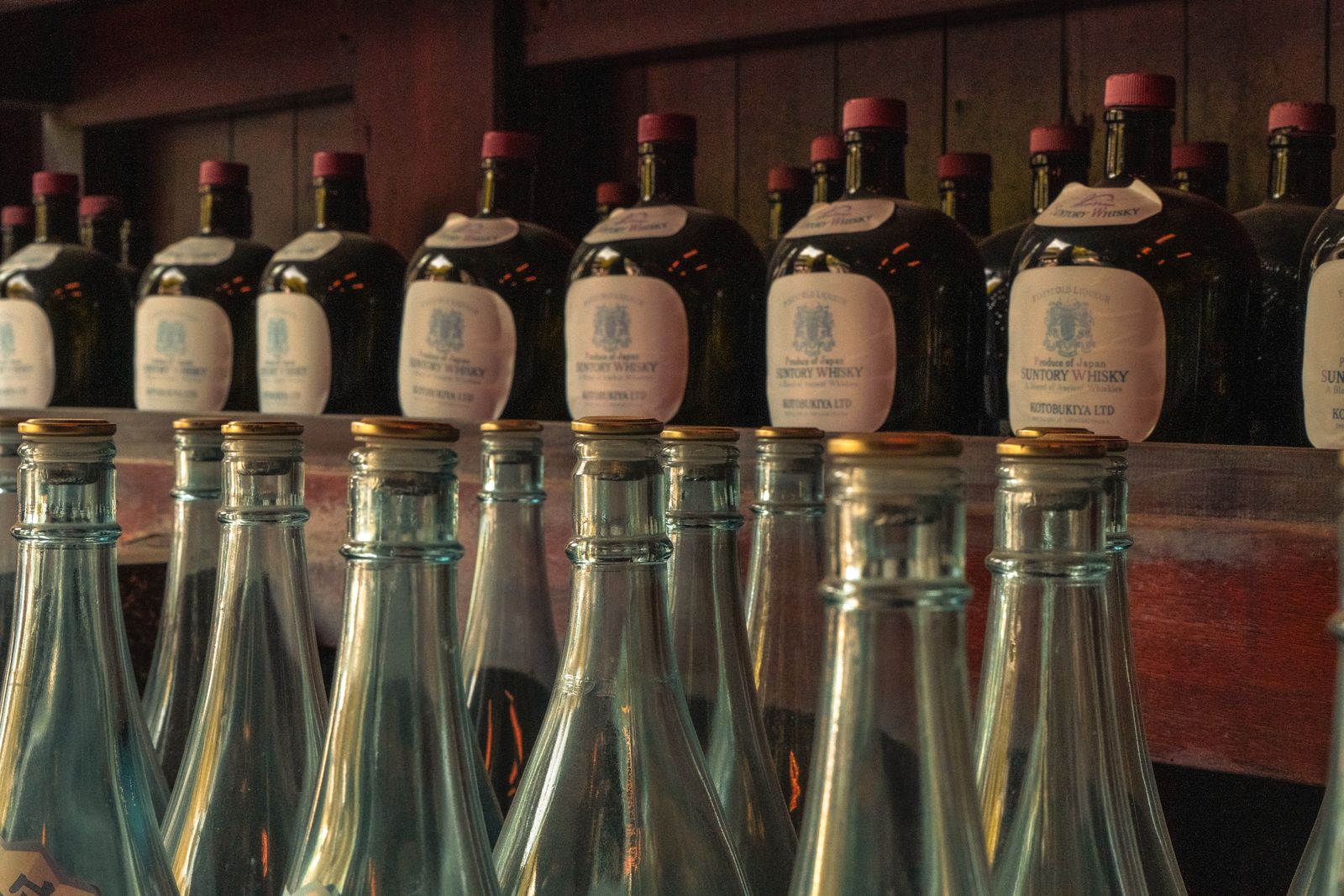
Shinjiro Torii opened his shop in Osaka in 1899, selling imported wines, and made his fortune with a sweetened wine called Akadama. His ambition was a whisky that Japanese drinkers would call their own, and in 1923 he began building the country’s first commercial malt whisky distillery at Yamazaki, in Shimamoto, on the Osaka side of the border with Kyoto. He chose the site for its water — the tea master Sen no Rikyu is said to have built a tea house nearby for the same reason — and for the humid, misty climate where the Katsura, Uji and Kizu rivers meet.
To run it, Torii hired Masataka Taketsuru, a chemist who had studied whisky-making in Scotland. Taketsuru left a decade later to found his own company, Nikka, and its first distillery at Yoichi in Hokkaido, where the climate reminded him of the Highlands. Between them, the two men created the two companies that still dominate Japanese whisky. Torii’s company, Kotobukiya, took the name Suntory in 1963, and it still has its roots in the city.
For decades Japanese whisky was mostly drunk at home, diluted with water and ice as mizuwari, or in the hostess bars of Kitashinchi. Two things changed that. From 2008, Suntory revived the whisky highball as an everyday drink and made it the default order in every izakaya in the country. Then, from the 2000s, Japanese single malts started beating Scotch in international competitions, and in the 2010s the world discovered them all at once. Demand outran the stock that had been laid down years earlier, and in 2018 some of the most famous age-statement bottles were withdrawn. Prices have been rising ever since.
What to drink
The big two
- Suntory — Yamazaki (fruity, complex, often with a Japanese oak note), Hakushu (from a forest distillery in the mountains, fresh and lightly smoky), Hibiki (the blend), and the grain whisky Chita. Kakubin, in its square, tortoiseshell-cut bottle with the yellow label, is the highball whisky of the nation.
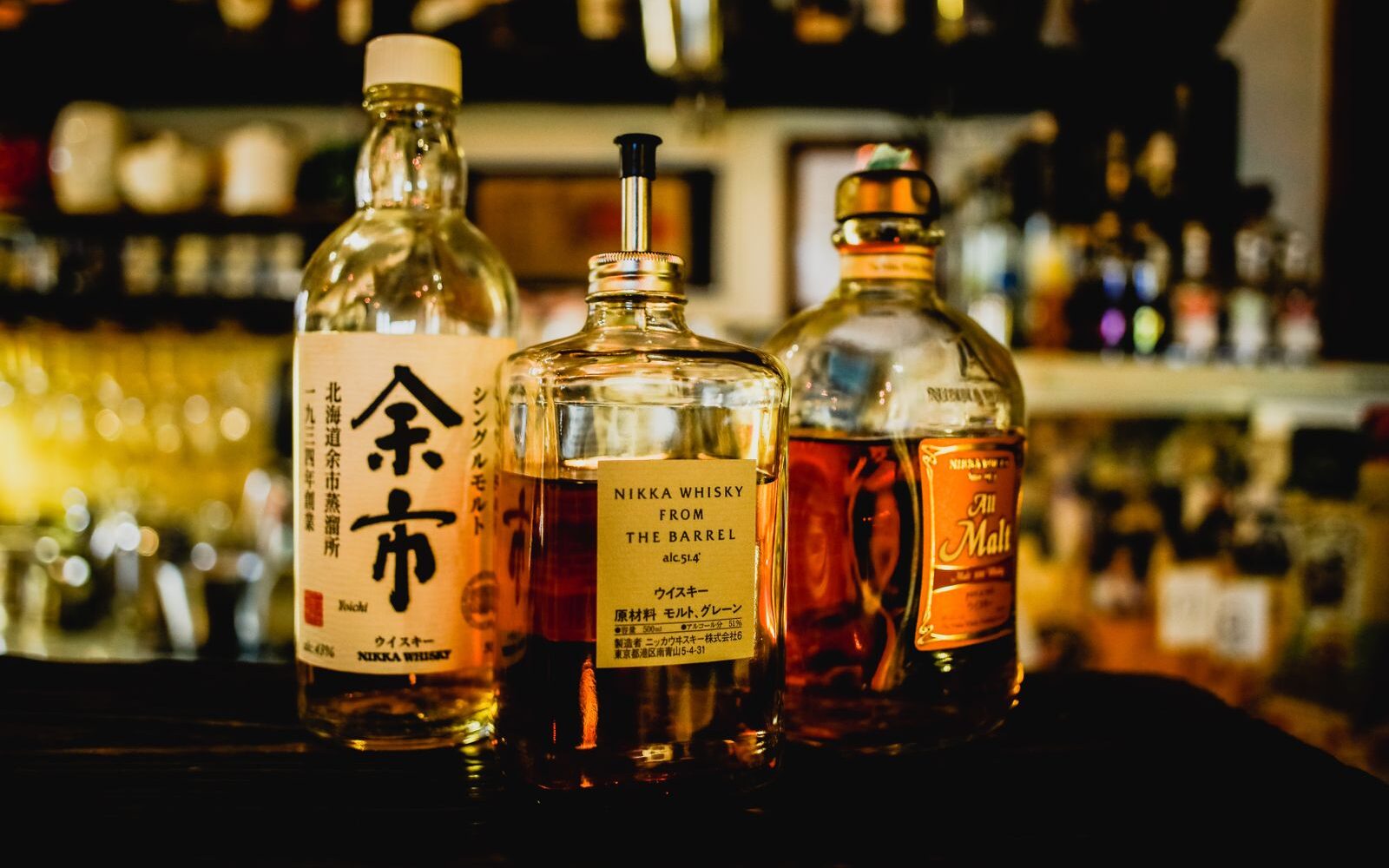
- Nikka — Yoichi (robust, coastal, with peat), Miyagikyo (softer, fruitier), Taketsuru (a pure malt blend), and From the Barrel, a small, strong, remarkably good-value blend that bartenders love.
The craft distilleries
The most exciting Japanese whisky now comes from small distilleries, many of them founded or revived in the last twenty years: Chichibu in Saitama, Mars in Nagano and Kagoshima, Kanosuke, Saburomaru, Shizuoka, Akkeshi. Two are within reach of Osaka: Akashi, made by the Eigashima sake brewery near Kobe, and Nagahama, a tiny distillery in Shiga. A good whisky bar will have several of these open, and they are where the interesting drinking is.
Reading the label
For years “Japanese whisky” had no legal definition, and some bottles sold as Japanese contained whisky imported from abroad and blended or bottled in Japan. The industry’s own standard, which took full effect in April 2024, now reserves the term for whisky mashed, distilled and aged for at least three years in Japan, and bottled there. Bottles labelled as a “blended whisky” or “world whisky” without that claim may contain imported spirit. There is nothing wrong with that if you like the taste; just know what you are buying.
Being realistic about the rare stuff
Age-statement Yamazaki, Hakushu and Hibiki are scarce, and bars price them accordingly. A pour of an 18-year-old can cost several thousand yen, and genuinely rare bottles — old single casks, closed distilleries — can run to ¥8,000 or more a glass. The no-age-statement versions and the craft distilleries give you far more whisky for your money, and a good bartender will steer you to something better than the famous name you came in asking for.
How Osaka whisky bars work
Japanese bars have their own customs. None of them is complicated, and knowing them in advance removes almost all the awkwardness.
- Cover charges are normal. Most sit-down bars add a table charge, sometimes with a small snack. Expect roughly ¥500–2,000, and more in Kitashinchi, where ¥800–3,000 is common. It is not a scam; it is how bars are priced. If a bar has no menu and no prices anywhere, ask before you sit down.
- Sit at the counter. The counter is the heart of any Japanese bar, and it is where the bartender will talk to you. Many whisky bars are little more than a counter and a wall of bottles.
- There may be no menu. Tell the bartender what you like — smoky, sherried, light, Japanese only, something you cannot get at home — and a budget. Then let them choose. This is the best way to drink in a Japanese whisky bar.
- Ask the price of rare pours. Nobody will be offended. A dram from a bottle that no longer exists can cost more than the rest of your evening.
- Pours are measured. A single is usually around 30 ml. Many bars offer half measures of expensive whiskies, which are a good way to try several.
- Keep it quiet. These are small rooms. Conversation is fine; volume is not. Ask before photographing the back bar.
- Smoking may be allowed. Some small, long-established bars are still permitted to allow smoking, and a few specialise in cigars. Signs at the door tell you which.
- Pay as you leave. Many bars now take cards, but not all; carry cash. And do not tip. See our money guide.
How to order it
- Sutorēto — neat.
- Rokku — on the rocks, usually over a single hand-cut ball or block of ice.
- Towaisu appu — “twice up”, whisky with an equal measure of room-temperature water. A good way to open up a young whisky.
- Mizuwari — whisky with ice and cold water, stirred. The traditional Japanese way, and much better with food than you might expect.
- Haibōru — the highball.
Our Japanese phrases for Osaka has the rest of what you need at a bar counter.
The best whisky bars in Osaka
Umeda
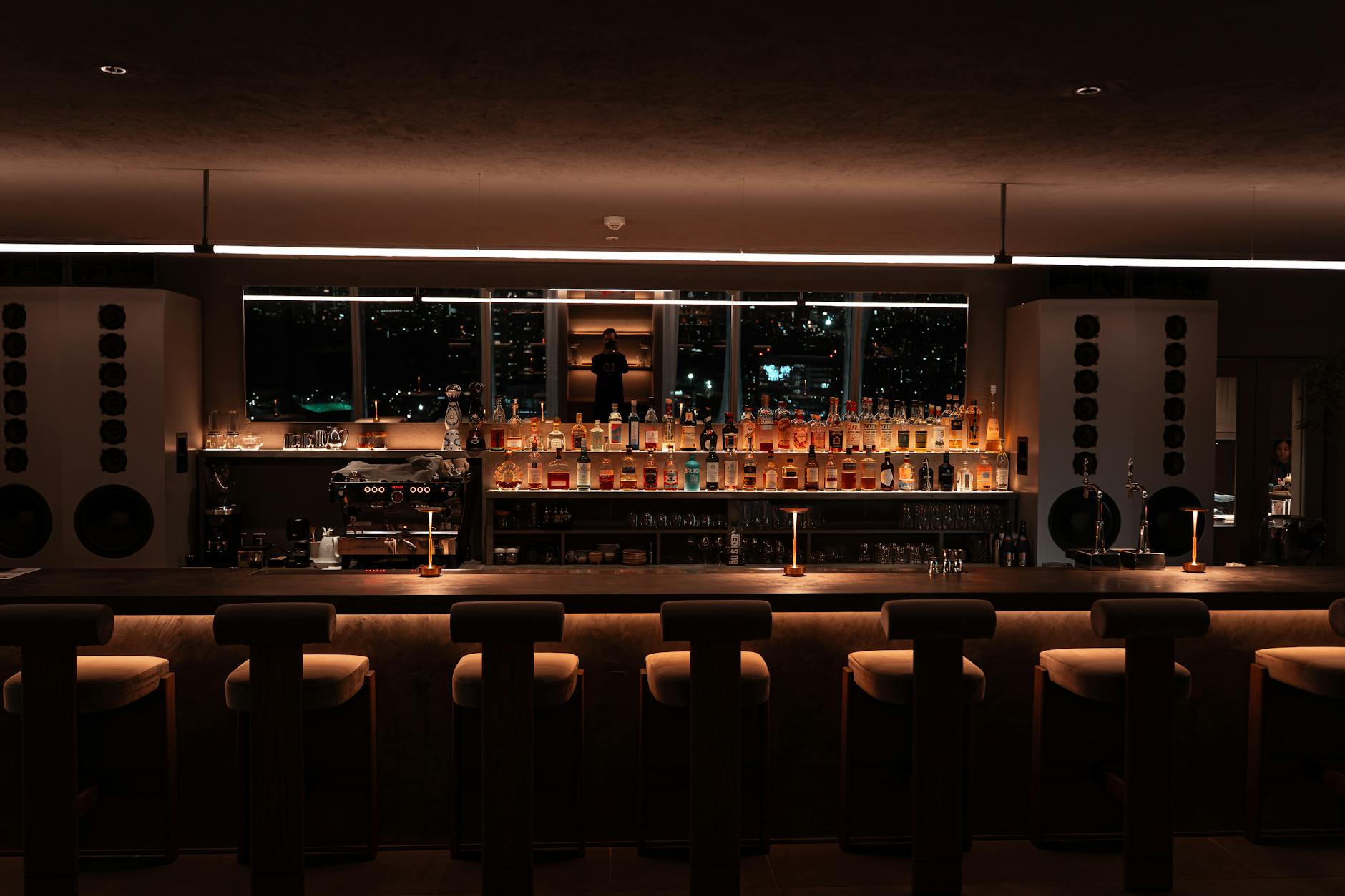
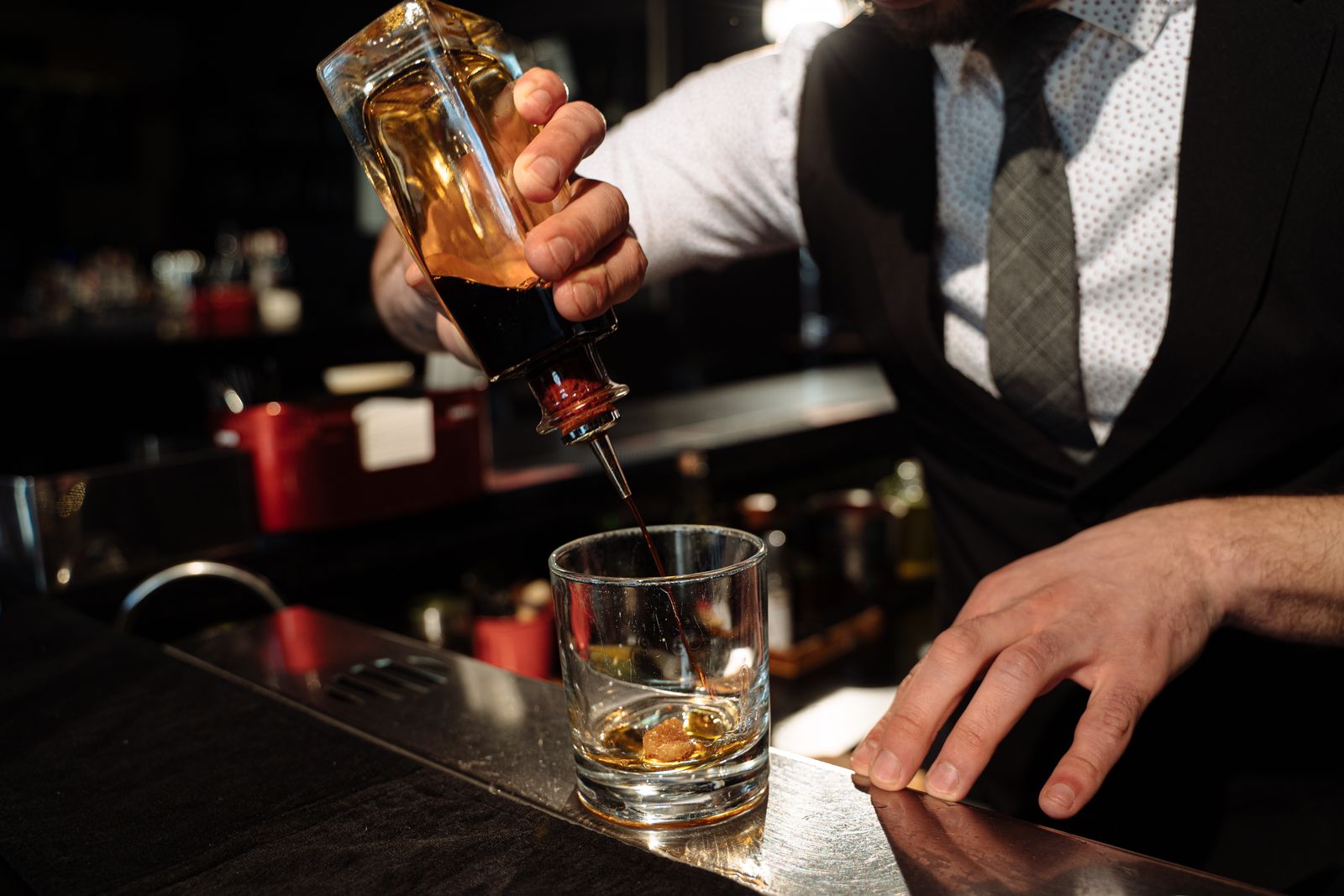
- Bar Augusta Tarlogie — the best-known serious whisky bar in the city, a four-minute walk from Hankyu’s Osaka-umeda station. A long list of rare Japanese and Scotch whiskies, including old Nikka single malts, a signature cocktail called the Augusta 7, an English menu, and a warm welcome for visitors who are genuinely interested. Open 17:00–24:00, closed on Tuesdays; budget around ¥6,000–8,000 for an evening. Cards accepted.
- Suntory Whisky House — Suntory’s own space at the northern edge of Umeda, towards Nakatsu, with displays of historic bottles and the chance to taste the company’s whiskies in a structured way. The best consolation if you cannot get into the Yamazaki distillery.
Kitashinchi
Kitashinchi, the expense-account district just south of Osaka Station, has the highest concentration of serious bars in the city, and the highest prices.
- Tarlogie SONA — the Kitashinchi sister of Augusta Tarlogie, three minutes’ walk from JR Kitashinchi station. Calm, warm, and made for taking your time. Open from 19:00 on weekdays and Saturdays; closed on Sundays and public holidays.
- Bar K — a classic Kitashinchi counter, known for polished service and a quiet room.
- Bar Yoshida — a long-established bar with an old-fashioned interior and a kitchen, where the classic pairing is a Yamazaki with the house’s beef dishes.
A warning that applies to Kitashinchi and nowhere else on this list: the district is also full of hostess clubs and “snack” bars, where the charges are opaque and can be very high. The bars above are proper bars. If someone on the street offers to take you to a bar, decline.
Namba and Dotonbori
- Malt Bar Takigiya — a malt bar in the Hozenji area, with jazz on the stereo and the lanes of Hozenji Yokocho outside.
- Bar Freedom — a tiny Dotonbori bar with a focus on Japanese whisky.
The south is better known for standing bars and backstreet drinking than for whisky dens; our guides to Ura-Namba bar hopping and Dotonbori after dark cover the rest.
Shin-Osaka
- One Shot Bar Keith — a specialist in Japanese whisky, near Shin-Osaka, with one of the deepest Japanese selections in the city and a following among serious collectors. Worth the short trip north from the centre.
With a view
- 40 Sky Bar & Lounge — on the 40th floor of the Conrad in Nakanoshima, indoors behind glass, with a strong Japanese whisky list. Cocktails run around ¥2,800–4,000, and a cover charge of around ¥1,650 applies at some times of day. You are paying for the view, and on a clear night it is worth it. See our rooftop bars guide.
Bars open and close, and their hours change. Check a bar’s current details before making a special trip, and book the smaller ones on busy nights. For bars of every kind, see our best bars in Osaka guide.
The highball: Osaka’s everyday whisky
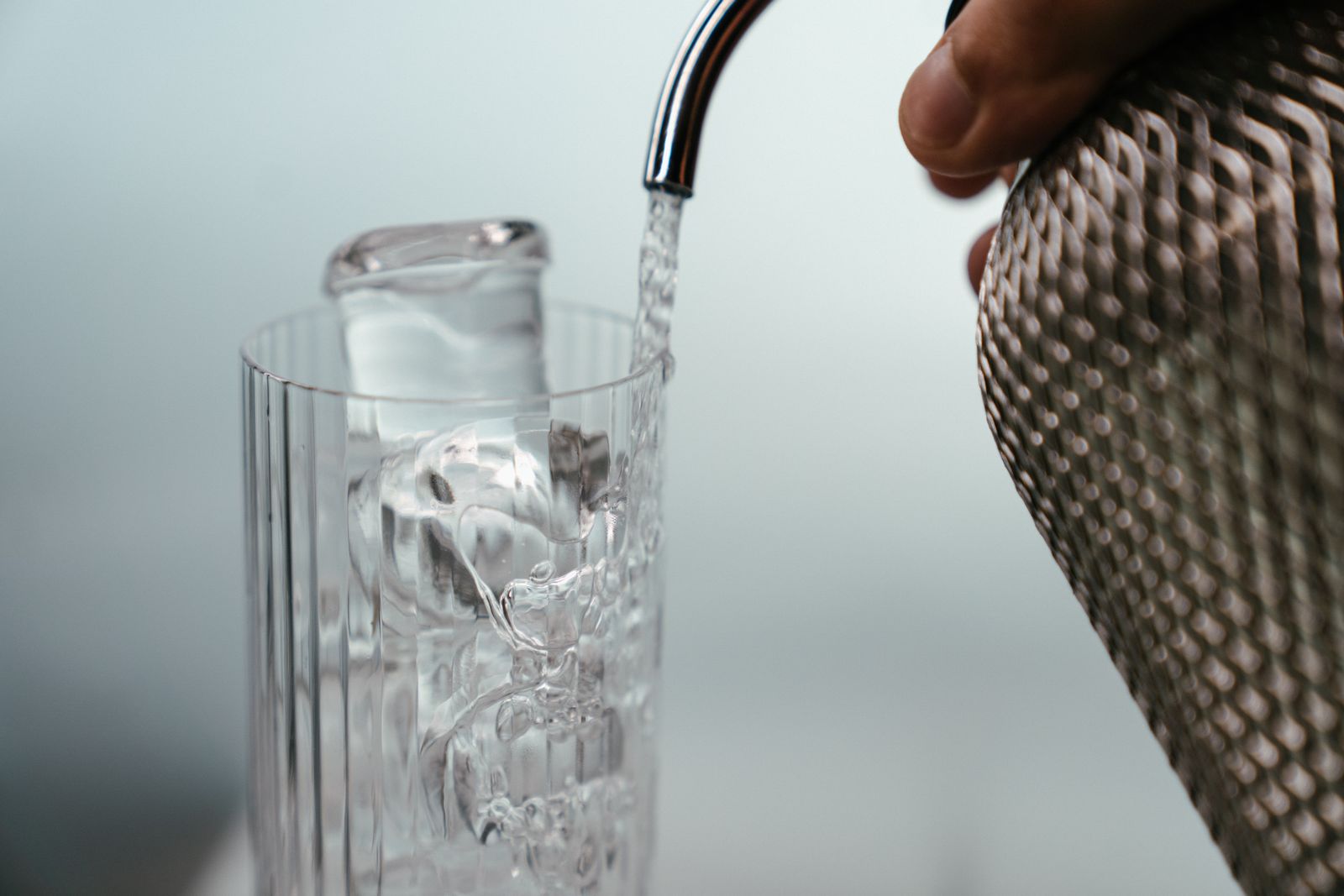
Most whisky drunk in Osaka is drunk as a highball: whisky and soda over ice in a tall glass, served in every izakaya, yakitori counter and standing bar in the city for a few hundred yen, usually around ¥400–700. It is light, dry and brilliantly good with fried and grilled food, which is to say with most Osaka food.
The standard pour is Kakubin, Suntory’s blended whisky, and many bars have a highball tap. Specialist bars go further: frozen glasses, a single spear of clear ice, extra-carbonated soda, and a menu of highballs made with different whiskies. At the everyday end, a highball and a plate of kushikatsu in Shinsekai is one of the great cheap pleasures of the city. Our izakaya guide and happy hour guide tell you where.
Visiting the Yamazaki distillery
The distillery where it all began is about half an hour from central Osaka, and it is the pilgrimage every whisky lover wants to make. It is also one of the hardest bookings in Japan.
- Tours are by lottery. Since the distillery was renovated for its centenary in 2023, tours have been allocated by an online lottery that opens roughly two months ahead. You pick a few preferred dates and hear about a month later. Most applicants do not win.
- What they cost: the standard tour and tasting, about 80 minutes, costs around ¥3,000; the prestige tour, about two hours, around ¥10,000. English-guided tours usually run about once a day.
- The consolation prizes: the whisky museum, which is free but needs a reservation, and the paid tasting counter are usually much easier to book than the tour, and the tasting counter is where you can try whiskies you will not find in most bars.
- Getting there: JR to Yamazaki station, or Hankyu to Oyamazaki, then a short walk. The distillery is on the Osaka side of the border; the stations are just over it, in Kyoto Prefecture. It fits neatly into a day heading to or from Kyoto — see Osaka to Kyoto.
Our honest advice: enter the lottery as soon as it opens for your dates, book the museum and tasting counter as a fallback, and if neither works, go to the Suntory Whisky House in Umeda and a good bar instead. You will taste more whisky, and some of it will be better than what you would have tried on the tour.
Other distilleries within reach
The Eigashima brewery near Akashi, west of Kobe, makes Akashi whisky alongside its sake, and Nagahama in Shiga runs its tiny stills in a building shared with a brewpub. Both have welcomed visitors, but arrangements change: check before you go. Akashi pairs naturally with a Kobe day trip, and our day trips from Osaka guide covers the rest of the region.
Buying a bottle to take home
- Expect limits. Popular Japanese whiskies are often allocated, with one-per-customer signs, and age-statement bottles are rarely on open shelves at all.
- Where to look: the liquor sections of the big department stores, electronics chains such as Bic Camera, and the specialist liquor chains, which tend to have better selections and fairer prices than the shops aimed at tourists. See Osaka department stores.
- Try before you buy. The best way to choose a bottle is to taste it first at a bar. Craft distillery bottles are often easier to find, and more interesting, than the famous names.
- Tax-free has changed. From 1 November 2026, visitors pay the full price in the shop and claim the 10% consumption tax back after customs confirms the export at the airport. Drink bought tax-free must not be opened in Japan. See our tax-free shopping guide, and check your home country’s customs allowance.
- Pack it in checked luggage, well wrapped. Our Osaka souvenirs guide has other ideas for things to bring home.
A whisky evening in Osaka
- 18:00 — a highball and yakitori at an izakaya in Umeda or Fukushima, to start the evening properly.
- 19:30 — walk to Kitashinchi for Tarlogie SONA or Bar K. Tell the bartender what you like and ask for two Japanese whiskies you have never tried.
- 21:30 — back north to Bar Augusta Tarlogie for one rare dram, priced before you order.
- 23:00 — ramen, and a taxi or the last train. The subway stops around midnight; see late-night food and Osaka taxis.
What to skip
- Chasing famous age statements. You will pay a great deal for a name. Ask for something interesting instead.
- Any bar you are led to by a street tout, especially in Kitashinchi and around Namba.
- Buying bottles in the tourist-heavy shops without comparing prices elsewhere.
- Ordering a rare pour without asking the price.
- Skipping the highball because it sounds unsophisticated. It is the drink Osaka actually drinks.
Osaka whisky bars: FAQ
What is the best whisky bar in Osaka?
For most visitors, Bar Augusta Tarlogie in Umeda: a deep list of rare Japanese and Scotch whiskies, an English menu and a genuine welcome. For Japanese whisky specifically, One Shot Bar Keith near Shin-Osaka is a favourite with collectors.
How much does a whisky cost in an Osaka bar?
A highball costs around ¥400–700 in an izakaya. A neat pour of a good Japanese whisky in a specialist bar costs roughly ¥1,500–5,000, and rare bottles more. Most sit-down bars add a cover charge of ¥500–2,000, more in Kitashinchi.
Do Osaka bars have cover charges?
Most sit-down bars do, often with a small snack. It is standard practice, not a scam. Ask if no prices are shown.
Can I visit the Yamazaki distillery?
Yes, but tours are allocated by an online lottery about two months ahead, and most applicants do not win. The museum and tasting counter are easier to book. The Suntory Whisky House in Umeda is a good alternative.
Is Japanese whisky cheaper in Japan?
The everyday blends are, and craft bottles are easier to find. Age-statement Yamazaki, Hakushu and Hibiki are scarce everywhere, including in Japan, and often limited to one per customer.
What should I order if I am new to Japanese whisky?
Start with a highball, then ask a bartender for a flight: a Yamazaki or Hakushu without an age statement, a Nikka From the Barrel, and something from a craft distillery such as Chichibu or Akashi.
Where to go next
For the rest of the city’s drinking, start with the best bars in Osaka and our guide to Osaka nightlife; for sake and beer, craft beer and sake. For the districts, read Kitashinchi, Umeda and Nakanoshima.
Then fit the evenings into the trip with the Osaka itinerary hub.