This article contains advertising. Our booking links are routed through a partner that adds commission tracking automatically, so if you book through one we earn a commission from the provider, at no extra cost to you. It never affects what we recommend. Affiliate disclosure
Here is the sentence that ruins more Universal Studios Japan days than any other: your park ticket does not get you into Super Nintendo World. It gets you through the front gate. Access to the single area most people flew here for is controlled separately, it is rationed, and on a busy day it can be gone by mid-morning while you are still queuing for a churro.

USJ has one of the more complicated ticketing systems in the theme park world — dynamic daily pricing, more than thirty Express Pass variants, an app requirement that changed in January 2026, and a controlled-entry area with three separate ways in. It is entirely navigable once you understand the structure, and this guide lays it out in the order the decisions actually happen.
The structure, in one paragraph
You need one admission ticket (a Studio Pass). You may optionally add one Express Pass, which is not an admission ticket and cannot be used alone — it shortens queues at a named list of attractions and some variants include timed entry to Super Nintendo World. If you do not buy an Express Pass, you need a free Area Timed Entry Ticket from the official app to enter Super Nintendo World, and those are issued on the day and run out. That is the whole system. Everything below is detail on those three things.
Studio Passes: the ticket that gets you in
The 1-Day Studio Pass
The standard ticket, valid for one day at the gate. As of 2026, prices start from ¥8,400 for an adult, ¥5,500 for a child (4 to 11) and ¥7,600 for a senior (65 and over). Children under four go free.
Those are starting prices, not the price. USJ uses date-based dynamic pricing: the same ticket costs meaningfully more on a Saturday, during Japanese school holidays, in Golden Week and across the New Year period. The spread between the cheapest and most expensive days in a year is substantial — a peak-date adult ticket can run several thousand yen above the floor price.
The 2-Day Studio Pass
Two consecutive days, at a per-day price below two singles. Worth it in exactly one situation: you want to do both Super Nintendo World and the Wizarding World properly, plus the shows, and you are unwilling to spend the money on an Express Pass. Two unhurried days without Express beats one frantic day with it for a lot of families, and it costs less.
It is not worth it if you have four days in Osaka total. A second USJ day in a short trip comes at the cost of the castle, Kyoto or Dotonbori, and that is a bad trade.
Annual passes
Around ¥33,800 adult, ¥27,800 child and ¥31,800 senior, with cheaper tiers that black out peak dates. The maths is straightforward: at roughly four visits, an annual pass pays for itself. That makes it irrelevant to almost every visitor and obvious for anyone living in Kansai for a year.
Evening and short-day tickets
USJ has at various times sold discounted late-entry tickets for the final hours of the day. Availability varies by season and they are not always on sale. Check the ticket calendar for your dates rather than planning around one; if one is available on a long summer operating day, it is genuinely good value for a park that is at its best after dark.
| Ticket | From (2026) | Best for |
|---|---|---|
| 1-Day Studio Pass, adult | ¥8,400+ | Almost everyone |
| 1-Day Studio Pass, child 4–11 | ¥5,500+ | Families |
| 1-Day Studio Pass, senior 65+ | ¥7,600+ | Older visitors |
| 2-Day Studio Pass | Below 2× single | Doing both major worlds unhurried |
| Express Pass 4, add-on | ¥10,800+ | Skipping four queues |
| Express Pass 7, add-on | Higher again | Peak dates, one shot at everything |
| Annual Pass, adult | ¥33,800 | Four visits or more |
All figures are 2026 starting prices and rise with date. Treat them as a floor.
How to beat the dynamic pricing
You cannot negotiate it, but you can plan around it. The pattern is reliable:
- Cheapest: Tuesday, Wednesday and Thursday outside Japanese school holidays. Mid-January to early March and mid-June are the softest windows of the year.
- Most expensive: Saturdays, Golden Week (late April to early May), the mid-August Obon period, and the last week of December. Prices and crowds peak together, which is the worst of both.
- The sweet spot: a weekday in a shoulder month. You save on the ticket and you save two hours of queuing, which is worth more.
Shifting a USJ day by 48 hours within the same trip is the single highest-value planning decision available to you. Our best time to visit guide and the Golden Week guide cover the calendar; Osaka in summer is worth reading before committing to an August date, because the heat at USJ is a genuine factor rather than a complaint.
Express Passes: the expensive decision
What they are, and what they are not
An Express Pass is an add-on. It does not admit you to the park. You must hold a Studio Pass as well, and buying an Express Pass without one is the most common ticketing error people make.
What it buys is a shorter queue at a fixed list of named attractions, usually one ride each, at a time you choose or are assigned. It does not make you faster everywhere. It is a list, and if the attraction you care about is not on that list, the pass does nothing for it.
The number is the count, not the quality
Express Pass 4 covers four attractions. Express Pass 7 covers seven. Higher tiers exist. The number is a quantity, not a grade — a Pass 4 is not a worse product than a Pass 7, it is a smaller one, and there are more than thirty variants across the two families with different attraction line-ups.
This matters enormously, because the variants differ in whether they include Super Nintendo World area entry. Some do. Some do not. The name usually tells you: a variant called something like "Express Pass 4 – Minecart & JAWS" includes Super Nintendo World area entry along with Mario Kart and Mine-Cart Madness, while other Pass 4 variants at a similar price include neither.
Read the attraction list before you pay. Not the name, not the price, the list. This is the single most expensive mistake available at USJ.
What they cost
Express Pass add-ons start at around ¥10,800 and climb steeply with date and variant. On a peak Saturday, a high-tier pass can cost considerably more than the admission ticket it sits on top of. They are also capped per day and sell out weeks in advance, particularly the variants including Nintendo World entry.
So the total for one adult on a busy day, with a good Express Pass, realistically lands somewhere between ¥25,000 and ¥35,000 before food. That is the number to have in your head; it is not a cheap day out. Our trip cost breakdown sets it against the rest of an Osaka budget.
Are they worth it? The honest framework
Not a yes or no — it depends on three things, and you can answer all three before you go.
Buy an Express Pass if:
- You are visiting on a weekend, a Japanese holiday, or in the 25th anniversary season, when standby waits of 180 to 240 minutes are reported on peak dates.
- You have exactly one day and there are four or more attractions you would be genuinely disappointed to miss.
- You are travelling with children whose patience is a finite and rapidly depleting resource. This is the strongest case of the three.
- You want guaranteed Super Nintendo World entry rather than the app lottery — and you have checked that your variant includes it.
Skip it if:
- You are going on a low-season weekday. On a quiet Tuesday in February the standby queues are manageable and an Express Pass buys you time you did not need.
- You have a 2-Day Pass. Two relaxed days costs less than one day with Express and delivers more.
- Your list is short. If there are two rides you care about, arrive at opening, do both before 10:30, and spend ¥20,000 on something else.
The middle path most people miss: buy the cheapest Express variant that includes Super Nintendo World entry, and take the standby queues for everything else. You have solved the actual bottleneck at the lowest possible price.
Getting into Super Nintendo World

This is the part to get right. Super Nintendo World operates controlled entry, meaning the area holds a limited number of people and admission is rationed. There are exactly three ways in.
1. An Express Pass that includes area timed entry
Guaranteed, expensive, and the only method you can lock in before you travel. Check the variant’s attraction list says so explicitly.
2. A free Area Timed Entry Ticket from the official app
Free with park admission, obtained on the day, and this is how most people get in. Since 5 January 2026 the official Universal Studios Japan app is required to obtain Area Timed Entry Tickets and Standby Entry Tickets — the old in-park ticketing machines are no longer the route in.
Practical consequences, and they matter:
- Download the app before you fly, not in the queue at the gate. Set it up, log in, and confirm it works.
- You need working data in the park. Park wifi exists and is variable. A data SIM or pocket wifi is close to essential on a USJ day — see the SIM and wifi guide.
- Tickets are issued from park opening and are gone quickly on busy days. Be through the gate at opening and open the app immediately.
- Each person needs their own ticket, linked to their own park admission, so have everyone’s ticket in the app before you arrive.
3. Walking in before crowd control begins
On quieter days the area is simply open until it fills, and controlled entry does not start until it does. Arriving at opening and going straight there — ahead of the people who stop for photographs at the globe — can get you in with no ticket at all. This works on low-season weekdays and does not work in August.
Donkey Kong Country
The Mine-Cart Madness expansion inside Super Nintendo World opened in late 2024 and is the newer draw. At peak times it operates as a separate hard ticket within the area, so area entry alone may not include it. The VIP Pass tier does include Donkey Kong Country entry. Our full Super Nintendo World guide covers the area, the Power-Up Bands and what is actually worth doing inside it.
The other big area: the Wizarding World
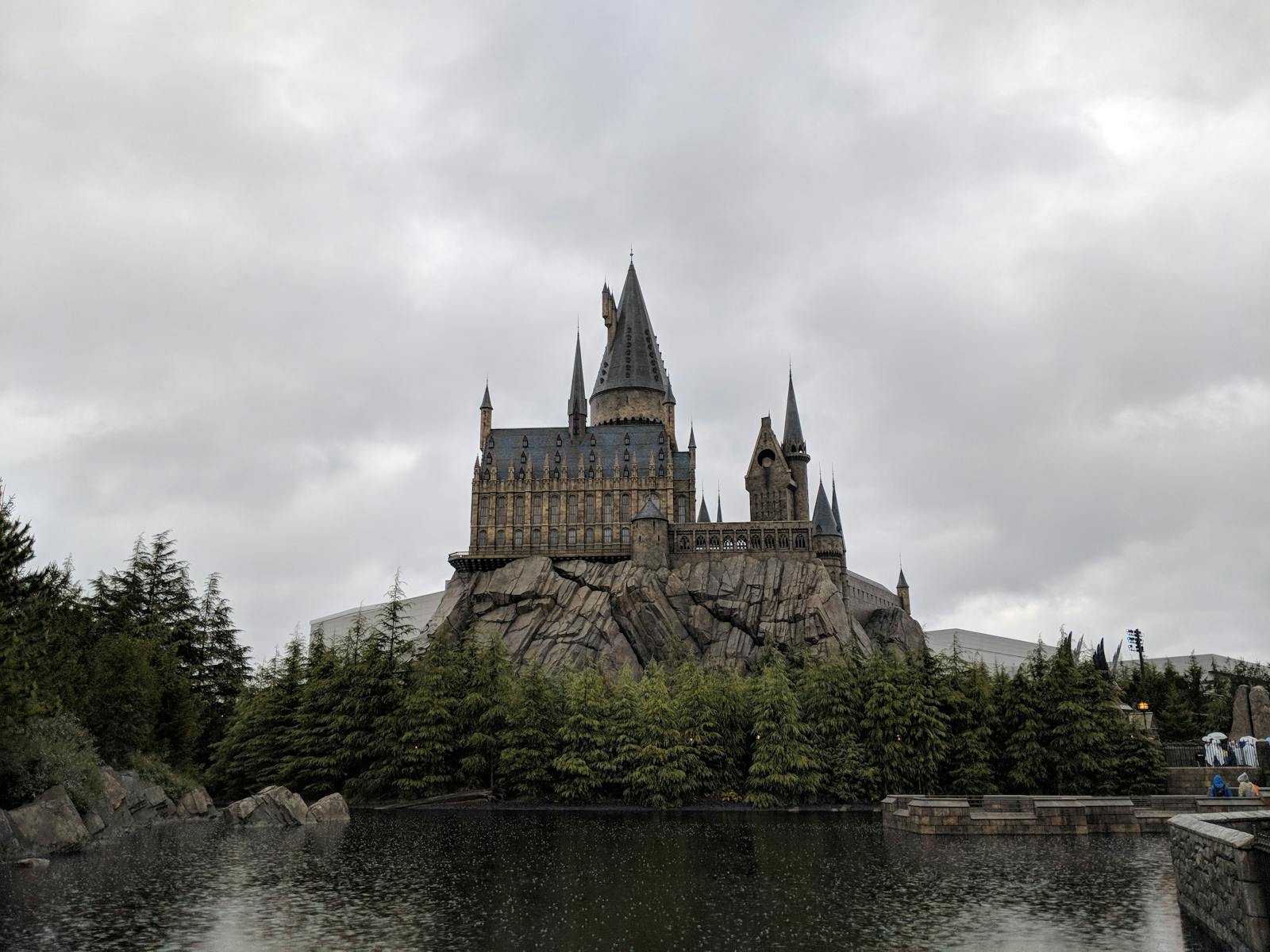
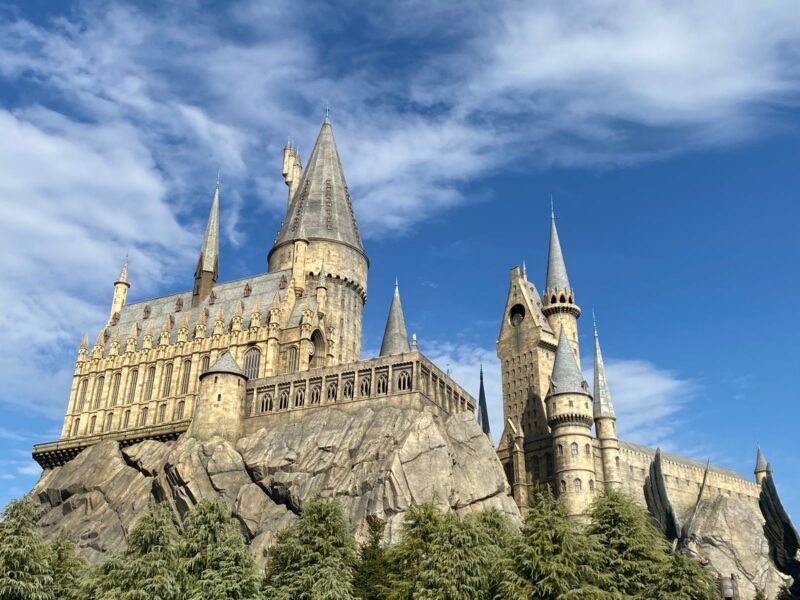
The Wizarding World of Harry Potter was USJ’s original controlled-entry area, and on very busy dates the park has used timed entry there too. In recent years it has generally been walk-in, but the mechanism exists and can be reactivated on peak dates — so if you are visiting in Golden Week or the New Year period, check the park’s own notices on the morning rather than assuming.
The practical planning point is a scheduling one. Nintendo World and the Wizarding World sit at opposite ends of the park, both take two to three hours to do properly, and both are best early or late. If you have a timed Nintendo World slot in the afternoon, do the Wizarding World at opening. If your slot is at opening, do Hogsmeade in the last two hours, when it is lit and half-empty and considerably better than it is at noon.
Two things inside cost extra and are worth knowing about before you budget: interactive wands, which unlock spell-casting points around Hogsmeade, and butterbeer, which is not included in anything. Neither is a rip-off exactly, but together they add several thousand yen per person to a day that is already expensive.
Practicalities that shape the day
- Lockers. Coin lockers are available near the entrance and at individual rides, and the ride-side ones are compulsory for loose items on the bigger coasters. Bring ¥100 coins; some are free for the duration of the queue and some are not. Large luggage is better left in the city — see the luggage storage guide.
- Height restrictions reshape a family day completely, and several headline attractions have limits above 120cm. Check before you buy an Express Pass for a child who cannot ride four of the attractions on it.
- Single rider queues exist on some attractions and are the best free time-saver in the park. If your group is willing to be split up for four minutes, you can cut a two-hour wait to twenty.
- Re-entry is generally permitted with a hand stamp, which makes a cheaper lunch at CityWalk practical.
- Weather. Outdoor attractions close in high wind and lightning, and there is no refund. Rain otherwise thins the crowd considerably and is quietly a good day to visit — see rainy day Osaka for the backup plan if it turns severe.
- Summer heat is the real hazard rather than the queues. Osaka in July and August is genuinely dangerous for anyone unused to that humidity, the queues are largely outdoors, and the park’s own advice to hydrate constantly should be taken literally.
Buying for a group
Book everyone on one transaction where you can. It keeps the party’s tickets together in one account, which matters when you come to load them into the app for Area Timed Entry Tickets — every person needs a ticket linked to their own admission, and reconciling four separately purchased tickets at the gate on a phone with two bars of signal is an unpleasant way to start a day.
If someone in the group is undecided, note that USJ tickets are date-specific and generally non-refundable and non-transferable. Buy for the day you will definitely go, not the day you might.
Where to buy
The official site
USJ’s own English website is the primary source, supports full English navigation, shows the date-by-date price calendar, and sells Express Passes alongside admission. Buy here by default. Tickets are issued as QR codes for direct entry — no collection window, no paper.
Authorised resellers
Klook and similar authorised sellers list USJ tickets, sometimes bundled, occasionally with a small discount, and with customer service in more languages. These are legitimate. The advantage is convenience and payment methods; the disadvantage is that Express Pass availability through resellers can lag the official site, and on a date where the pass you want is nearly sold out, the official site is where it will still be.
Hotel packages
Official partner hotels sell room-and-ticket packages, and some include early park entry on selected dates — typically fifteen minutes to an hour before general opening. On a busy date that is worth more than it sounds, because it puts you into Super Nintendo World’s queue for entry tickets ahead of the crowd. Our guide to hotels near USJ covers which properties qualify and whether staying out at the bay is worth the trade against a central Osaka base.
What to avoid
- Unofficial resale sites and auction listings. USJ tickets are date-linked and QR-based; a resold ticket may simply not scan, and there is no recourse at the gate.
- Buying at the gate on a busy day. Dated tickets sell out. Turning up hoping to buy is how people spend a morning at Universal City station rather than in the park.
- Assuming an Osaka city pass covers it. The Osaka Amazing Pass does not include USJ and never has. Nor does any JR pass.
The 25th anniversary year
USJ’s 25th anniversary season, themed Discover U!!, runs from 4 March 2026 to 30 March 2027, with Universal Cool Japan 2026 overlapping it. That means new shows, anniversary-only merchandise and a decorated park — and it also means crowds heavier than a normal year, with headline standby waits of 180 to 240 minutes reported on peak dates.
The practical advice for the anniversary year is simply the ordinary advice, applied harder: go on a weekday, buy tickets well in advance, and take the Express Pass decision more seriously than you otherwise would.
Getting there
The park sits at Universal City station on the JR Yumesaki (Sakurajima) line. From Osaka Station it is about 15 minutes, changing at Nishikujo. From Namba, take the subway to Nishikujo or the Loop Line round. An IC card works throughout — the ICOCA guide covers it — and the subway guide covers the wider network.
Direct trains from Osaka Station run on a schedule that thins outside peak times, so on the way in, check whether the next departure is direct or requires the change. Either way it is a short journey; this is one of the more accessible major theme parks in the world.
Arrive before opening, not at opening. Thirty to forty-five minutes early on a busy date. The gate queue itself takes time, and every minute before you are through it is a minute the Super Nintendo World entry tickets are being handed out without you.
What a day actually costs
| Item | Budget day | Typical day | Peak with Express |
|---|---|---|---|
| 1-Day Studio Pass | ¥8,400 | ¥10,000 | ¥12,000 |
| Express Pass | — | — | ¥13,000–20,000 |
| Trains, return | ¥400 | ¥400 | ¥400 |
| Food and drink | ¥2,000 | ¥3,500 | ¥5,000 |
| Merchandise | — | ¥3,000 | ¥6,000 |
| Total per adult | ~¥11,300 | ~¥17,000 | ~¥35,000+ |
Two ways to bring that down without spoiling the day. Eat one meal outside the park — Universal CityWalk, immediately outside the gates, is cheaper than inside and perfectly good. And decide your merchandise budget before you walk into the first shop, because the Power-Up Bands, the wands and the anniversary range are all designed to be irresistible and they add up fast. The money-saving guide has more of this thinking.
A day that works
- Before opening: at the gate 30–45 minutes early, app open, everyone’s ticket loaded.
- Opening: through the gate, immediately secure Super Nintendo World entry in the app. Do this before anything else, including photographs.
- Morning: whichever of the Wizarding World or Nintendo World you are not timed into. Standby queues are shortest in the first ninety minutes of the day by a wide margin.
- Midday: shows and indoor attractions. This is when queues peak and, in summer, when the heat is genuinely dangerous rather than merely unpleasant.
- Mid-afternoon: your timed Nintendo World slot, if that is what you were given.
- Evening: the park after dark is the best version of it. Queues drop, the lighting is excellent, and most families with small children have gone home.
With children, read USJ with kids before finalising this — height restrictions reshape the whole plan and Universal Wonderland deserves more of the day than adults expect.
Mistakes people actually make
- Buying an Express Pass without a Studio Pass. It is an add-on. It admits nobody.
- Buying an Express variant that excludes Super Nintendo World and assuming the number on the box covers it.
- Not downloading the app until arrival. Since January 2026 it is the only route to area entry tickets.
- Arriving at 10:30. The entry tickets and the short queues are both gone.
- Booking a Saturday because it fitted the itinerary, and paying a premium for a worse day.
- Planning a full Kyoto day either side of it. USJ is a whole day and you will be finished. Look at the itinerary planner for how to sequence it sensibly.
Frequently asked questions
How much are Universal Studios Japan tickets?
A 1-Day Studio Pass starts from ¥8,400 for an adult, ¥5,500 for a child aged 4–11 and ¥7,600 for a senior, rising with the date under dynamic pricing. Express Passes are separate add-ons starting around ¥10,800.
Does my ticket include Super Nintendo World?
It includes the right to enter the park, not guaranteed entry to the area. You additionally need a free Area Timed Entry Ticket from the official app, or an Express Pass variant that includes area entry, or to arrive early enough on a quiet day that controlled entry has not started.
Do I need the official app?
Yes. Since 5 January 2026 the app is required to obtain Area Timed Entry Tickets and Standby Entry Tickets. Download and set it up before you travel, and make sure you have mobile data in the park.
Is an Express Pass worth it?
On a weekend, a holiday or with impatient children, usually yes. On a low-season weekday, usually not. The middle option is the cheapest variant that includes Super Nintendo World entry, taking standby for everything else.
Can I buy tickets on the day?
Sometimes, but dated tickets sell out on busy dates and Express Passes sell out weeks ahead. Buy in advance.
Is USJ covered by the Osaka Amazing Pass or a JR Pass?
No. Neither covers admission. A JR pass covers the train to Universal City station only.
How many days do I need?
One is enough for most people. Two is better if you want both Super Nintendo World and the Wizarding World unhurried, and a 2-Day Pass costs less than one day with an Express Pass.
What is the cheapest day to go?
A Tuesday, Wednesday or Thursday outside Japanese school holidays, with mid-January to early March and mid-June the softest windows. You save on the ticket and on queuing at the same time.
Where should I stay?
Central Osaka is fine — it is a fifteen-minute train ride. Staying at an official partner hotel buys early entry on some dates, which is the real argument for it. See hotels near USJ and where to stay in Osaka.
Can I bring food into the park?
Outside food and drink is generally not permitted beyond baby food and medical requirements. Universal CityWalk outside the gates is the cheaper option for a meal.
Where to go from here
Get three things right and the rest of the day looks after itself: pick a weekday, buy the Studio Pass in advance for that exact date, and have the app installed and working before you reach the gate. Everything else — the Express Pass, the merchandise, the meal plan — is optimisation on top of a day that already works.
Read our full Universal Studios Japan guide next for what is actually in the park, then Super Nintendo World for the area everyone comes for. Families should add USJ with kids, and anyone weighing a bay-area base should read hotels near USJ and the bay area guide — Kaiyukan aquarium is the obvious pairing for the day after.
Before you add an Express Pass to your admission, read our USJ Express Pass guide — two passes with the same number can cover completely different rides.
Planning your day around Hogwarts? Our Harry Potter at USJ guide explains how timed entry works for the Wizarding World and what the wands and Butterbeer add to the bill.
Autumn and winter dates come with extras that a Studio Pass does not cover, from Halloween Express Pass sets to the New Year’s Eve Party Pass. Our USJ seasonal events guide sorts out what is included and what is not.