This article contains advertising. Our booking links are routed through a partner that adds commission tracking automatically, so if you book through one we earn a commission from the provider, at no extra cost to you. It never affects what we recommend. Affiliate disclosure
Walk down Ota Road, the narrow lane behind the electronics shops of Nipponbashi, on a Saturday afternoon and you will be handed several flyers before you reach the end of it. They come from young women in frilled aprons, lace headbands and knee socks, smiling, calling out in a sing-song voice, each standing outside a doorway or at the foot of a staircase. Most of them are inviting you into a maid cafe. One or two may be inviting you somewhere you would rather not go. Telling the difference, and knowing what happens once you are through the door, is what this guide is for.
Maid cafes are a Tokyo invention, born in Akihabara in the early 2000s, but Osaka has its own cluster in Nipponbashi’s Den Den Town, the city’s anime and electronics district. The maid cafe Osaka scene is smaller, a little less polished and a good deal less crowded with tourists than Akihabara’s, which makes it an easier place to try the experience once. Here is how it works, what it costs, the rules nobody tells you, where to go, and an honest answer to whether it is worth an hour of your trip.
What a maid cafe actually is
A maid cafe is a cafe built around a piece of role-play. The staff are dressed as maids in a style borrowed from anime and Victorian costume, and they treat every customer as the master or mistress of the house returning home. You are greeted with okaerinasaimase, goshujin-sama or ojō-sama, “welcome home, master” or “welcome home, my lady”, shown to your seat, and looked after with a performance of sweetness and attentiveness that runs from the moment you sit down to the moment you leave.
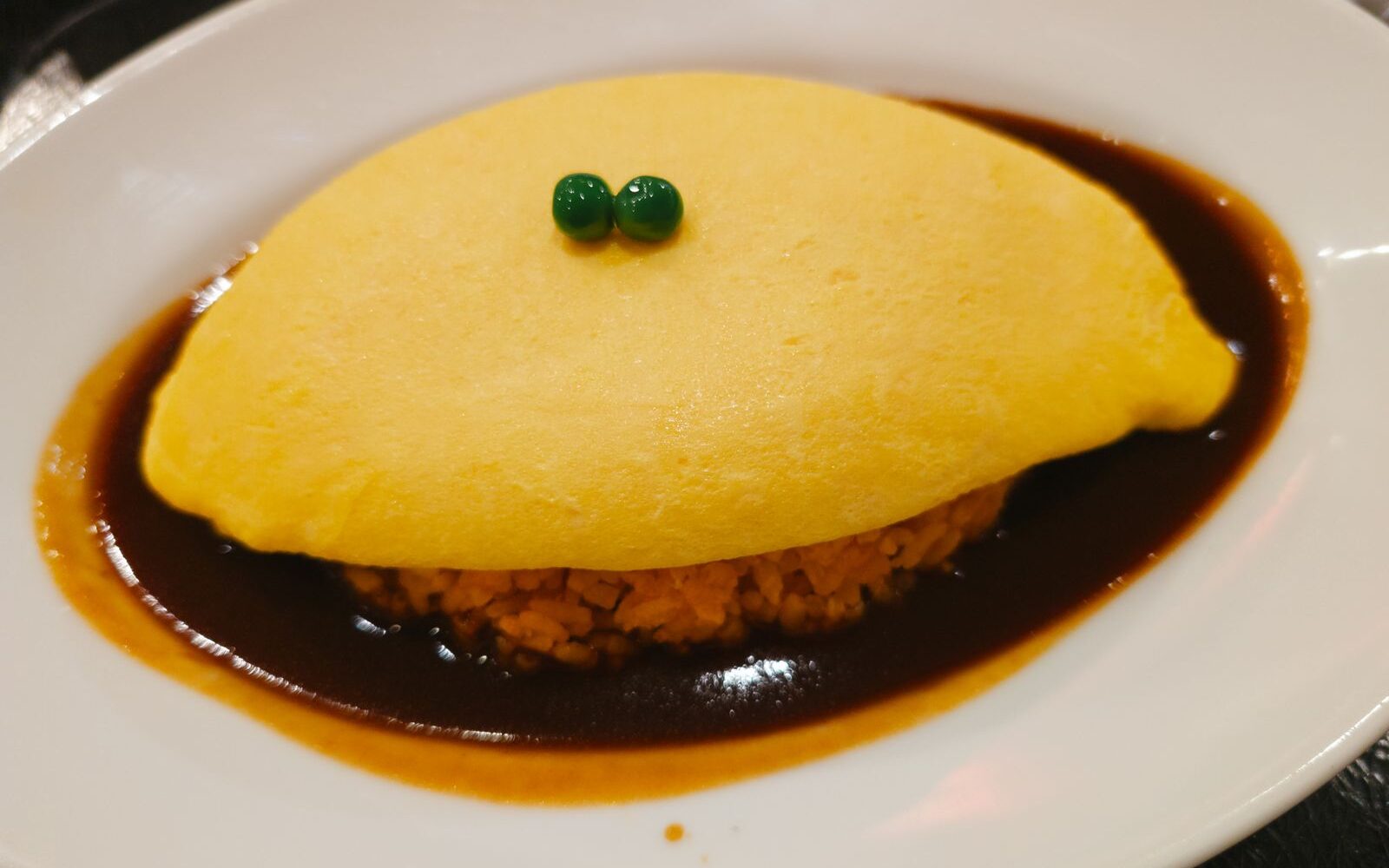
The food arrives plain and is finished at your table. The maid draws a face or a heart in ketchup on your omurice, then asks you to help her cast a spell to make it more delicious, which involves making a heart shape with your hands and chanting moe moe kyun. Some cafes have a stage where the maids sing and dance at intervals; most offer simple games; and almost all sell cheki, instant photos taken with the maid of your choice, which she then decorates by hand with coloured pens.
It is important to be clear about what it is not. A maid cafe is not a sexual venue, and the good ones are strict about that: no touching, no personal questions, no contact details, and a distinctly wholesome, almost childlike tone. The appeal for the regulars, who are mostly local men, is a consistent, friendly character to chat with and a place where they are always welcomed back. The appeal for visitors is that it is a piece of Japanese pop culture you cannot experience anywhere else, performed with complete commitment. Many people find it charming. Some find the dynamic of young women performing cuteness for paying customers uncomfortable, and if that is you, there is no need to go; Osaka has plenty of other themed cafes.
A short history, from Akihabara to Nipponbashi
The first permanent maid cafe is usually said to be Cure Maid Cafe, which opened in Akihabara in 2001, growing out of the costumed staff at anime and game events. The idea took off over the following years as otaku culture moved into the mainstream, helped along by the 2004 story Densha Otoko, the tale of a shy anime fan that became a bestselling book, a hit film and a television drama, and introduced much of Japan to Akihabara’s world. By the late 2000s maid cafes were a tourist attraction in their own right.
Osaka followed in Nipponbashi. Its electronics quarter boomed after the war on radio parts and appliances, which is where the nickname Den Den Town comes from, a playful doubling of den, from the word for electricity. As the appliance trade moved to the giant chain stores, anime, manga and game shops took over the side streets, the maid cafes arrived with them, and Ota Road, the lane behind the main avenue, became the heart of the scene. It remains smaller and more local than Akihabara, which is much of its charm.
How a visit works
- The welcome. A maid greets you at the door with the “welcome home” line and shows you to a table or a counter seat.
- The system. She will explain the rules and prices, in English at the larger cafes: usually a table charge for a fixed session of sixty to ninety minutes, plus a minimum order, often one food item and one drink, or a set.
- The order. Menus run to omurice, curry, parfaits, pancakes and brightly coloured drinks, all decorated in the cafe’s style. Sets bundle a main, a drink, a dessert and a photo, and are usually the easiest choice on a first visit.
- The spell. When your food arrives, the maid finishes it at the table and leads you through the chant. Join in; everyone does, and it is much less embarrassing than watching someone else refuse.
- Shows, games and photos. Depending on the cafe, there may be a short stage performance, a game such as rock-paper-scissors against the maid for a small prize, and the chance to buy a cheki.
- The goodbye. When your time is up, a maid will let you know. You pay at the register, and she sees you out with itterasshaimase, the phrase a family uses to someone leaving the house, which is the whole concept in a word.
What it costs
| Item | Typical price |
|---|---|
| Table charge, per person, per session of 60–90 minutes | ¥500–800 |
| Main dish such as omurice or curry | ¥800–1,500 |
| Drink | ¥500–900 |
| Cheki photo with a maid | ¥500–1,000 |
| Game | Around ¥500 |
| Typical total per person | ¥2,000–3,500 |
In practice, a first visit with a set and a photo comes to roughly ¥2,500–3,500 for an hour. The food is ordinary and, as food, overpriced; you are paying for the show. The table charge restarts if you stay past your session, so watch the time. Cash is the safest bet at the smaller cafes, and the big chains take cards.
The rules nobody tells you
- No photographs of the maids. This is the big one. The only way to have a photo with a maid is to buy a cheki. Many cafes also ban photographing the interior or other customers; photographing your own food is usually fine, but ask first.
- No touching, not even a hand on the arm, and no asking for phone numbers, social media accounts or anything personal. Maids will deflect politely and staff will step in if needed.
- Respect the time limit. When your session ends, either pay for another or leave. Lingering is poor form, and on busy days there will be people waiting.
- Do not wait outside for a maid after her shift, ever. Cafes take the safety of their staff seriously, and so should you.
- Join in, within reason. You will be invited to chant and make heart shapes. A half-hearted effort is fine; refusing to take part at all makes the experience awkward for you and the maid.
- Age rules. Most daytime cafes welcome all ages, but a few restrict entry for under-18s in the evening, especially where alcohol is served.
Photography etiquette in general is one of the rules that matters most in Japan, and our guide to Japanese etiquette in Osaka covers it alongside the other twenty-four.
First-visit tips
- Order a set. The first-visit or “welcome” set, with a main, a drink and a cheki, is the simplest way to get the whole experience at a known price.
- Go with a friend, or alone. Both are completely normal. Plenty of the regulars come alone, and a solo visitor at the counter often gets more conversation than a group at a table.
- Learn two phrases. Arigatō and a game attempt at the spell will get you further than fluent English.
- Understand the regulars. Many regulars have an oshi, a favourite maid whom they come to see, and the photos and chat they pay for are part of that relationship. Be friendly, but do not monopolise a maid who is clearly in demand.
- Go in the afternoon. Early afternoon on a weekday is the quietest time and the best for a relaxed first visit. Weekend afternoons are busiest, and evenings bring a different, often more adult crowd.
- Carry cash. The big chains take cards, but the smaller cafes may not, and cash makes the bill quicker at the end of your session.
Where to go in Osaka
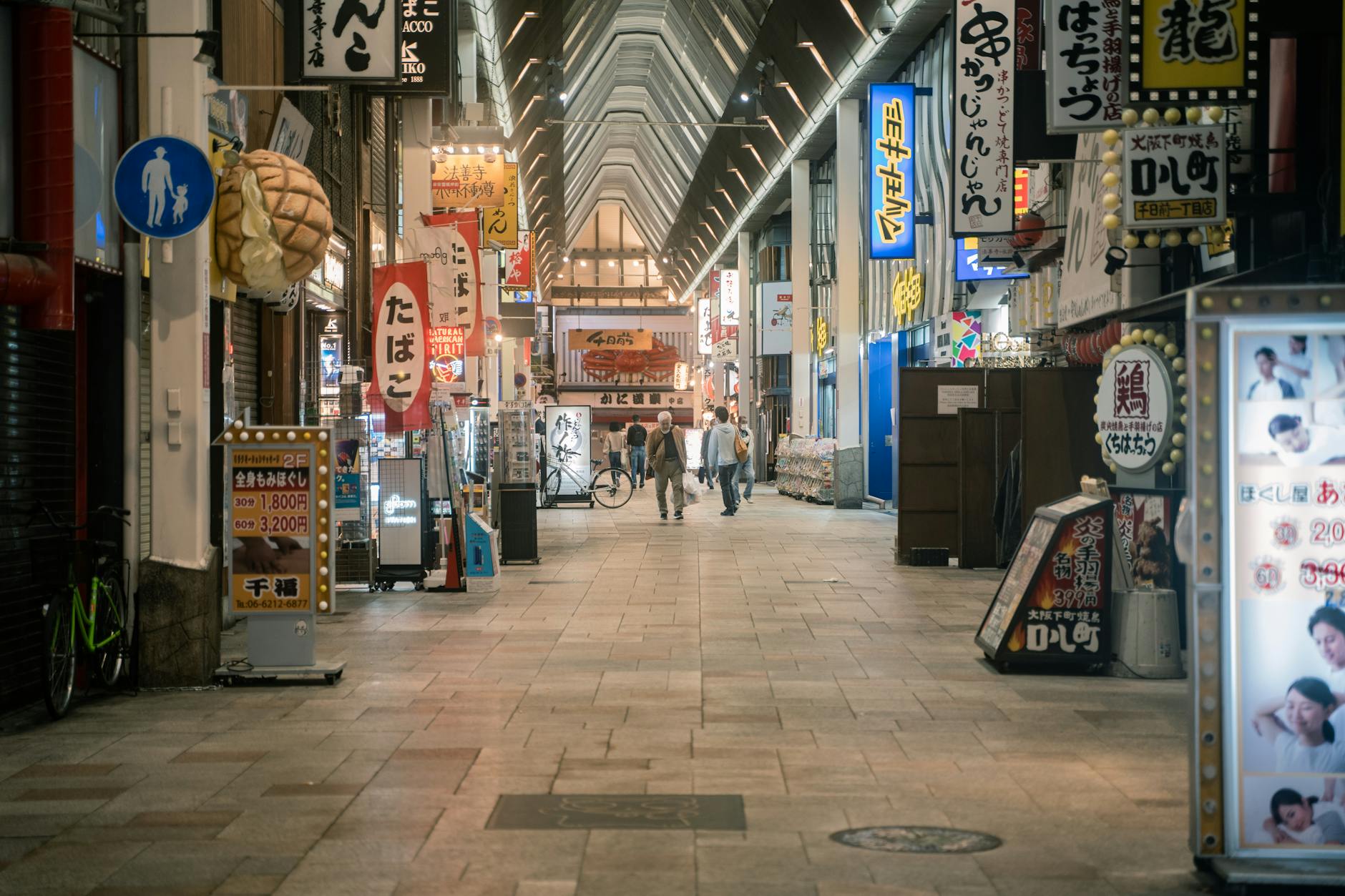
Almost all of Osaka’s maid cafes are in Nipponbashi’s Den Den Town, along and around Ota Road, the lane that runs parallel to Sakaisuji Avenue on its western side. Two big names are the safest bets for a first visit.
@home cafe Osaka Main Branch
The Osaka outpost of one of the best-known maid cafe chains from Akihabara occupies the first and second floors of the SEM Building at 4-9-13 Nipponbashi. It opens from 11:00 to 22:00. It is about ten minutes’ walk from Nippombashi station on the Osaka Metro and Kintetsu lines, and about nine from Ebisucho on the Sakaisuji line. It is well used to foreign visitors, with explanations and menus in English, regular events, and the option to book tickets online in advance, which is worth doing on weekends and holidays. If you only go to one maid cafe, this is the easiest one to get right.
Maidreamin Nipponbashi
Maidreamin, another large chain, has its Osaka branch at 4-16-15 Nipponbashi, about five minutes’ walk from exit 1-B of Ebisucho station and ten from exit 5 of Nippombashi. It opens from 11:30 to 23:00 on weekdays and from 10:30 to 23:00 at weekends and on public holidays. Maidreamin leans towards the theatrical end of the scene, with bright decor, elaborate sets and performances, and it is used to tourists. Its later closing time makes it the easier choice for an evening visit.
The smaller cafes on Ota Road
Ota Road and the streets around it have a changing cast of smaller, independent maid cafes. They tend to have fewer foreign customers, less English, cheaper prices and a more local, regulars-only feel, which can be either more authentic or more awkward depending on your Japanese and your confidence. If you try one, choose a cafe that posts its system and prices clearly at the entrance or on a menu board, and that you can see into, or at least find online. Be wary of any place that will not tell you the price before you sit down.
Concept cafes and bars: know the difference
Mixed in among the maid cafes, especially in the evening, are concept cafes, or konkafe: venues where staff dress to a theme, which may be maids but may equally be nurses, idols, school uniforms or anything else, and which often operate more like bars than cafes. Some are friendly and transparent. Others charge by the hour, push drinks bought for the staff at high prices, and can run up a bill that bears no relation to what you expected. Some of the people handing out flyers on the street, especially after dark, are working for these rather than for the maid cafes.
The rules are simple. Do not follow anyone from the street into a venue whose prices you have not seen. Check the system before you sit down, and leave politely if it is not what you expected. Stick to the established maid cafes for your first visit, and to the daytime. The same caution applies to touts anywhere in Minami; our guide to Dotonbori after dark covers the wider picture.
Getting there
Den Den Town runs along Sakaisuji Avenue between Nippombashi station in the north and Ebisucho station in the south, both on the Sakaisuji line; Nippombashi is also on the Sennichimae line and the Kintetsu lines. From Namba, it is a walk of about fifteen minutes east. The district sits neatly between Kuromon Market to the north and Shinsekai to the south, so a maid cafe slots easily into a day in Minami; our 2 days in Osaka itinerary walks through it on the way from the market to Tsutenkaku.
Is a maid cafe worth it?
Once, yes, for most people with any interest in Japanese pop culture. It is a strange, sweet, slightly surreal hour, and the commitment of the staff is impressive. Go in expecting a show rather than a cafe, budget an hour and around ¥3,000, join in with the spell, buy one cheki as a souvenir, and you will come away with a better story than most of your trip will give you.
It is not worth it for the food, which is ordinary and expensive, and it is not the place for anyone who finds the premise uncomfortable. If you want the themed-cafe experience without the role-play, Osaka has character and collaboration cafes, including the much-booked Pokemon Cafe covered in our Pokemon Center Osaka guide. And if you are short on time, Den Den Town’s shops and arcades are the better use of an afternoon.
Making a day of it in Den Den Town

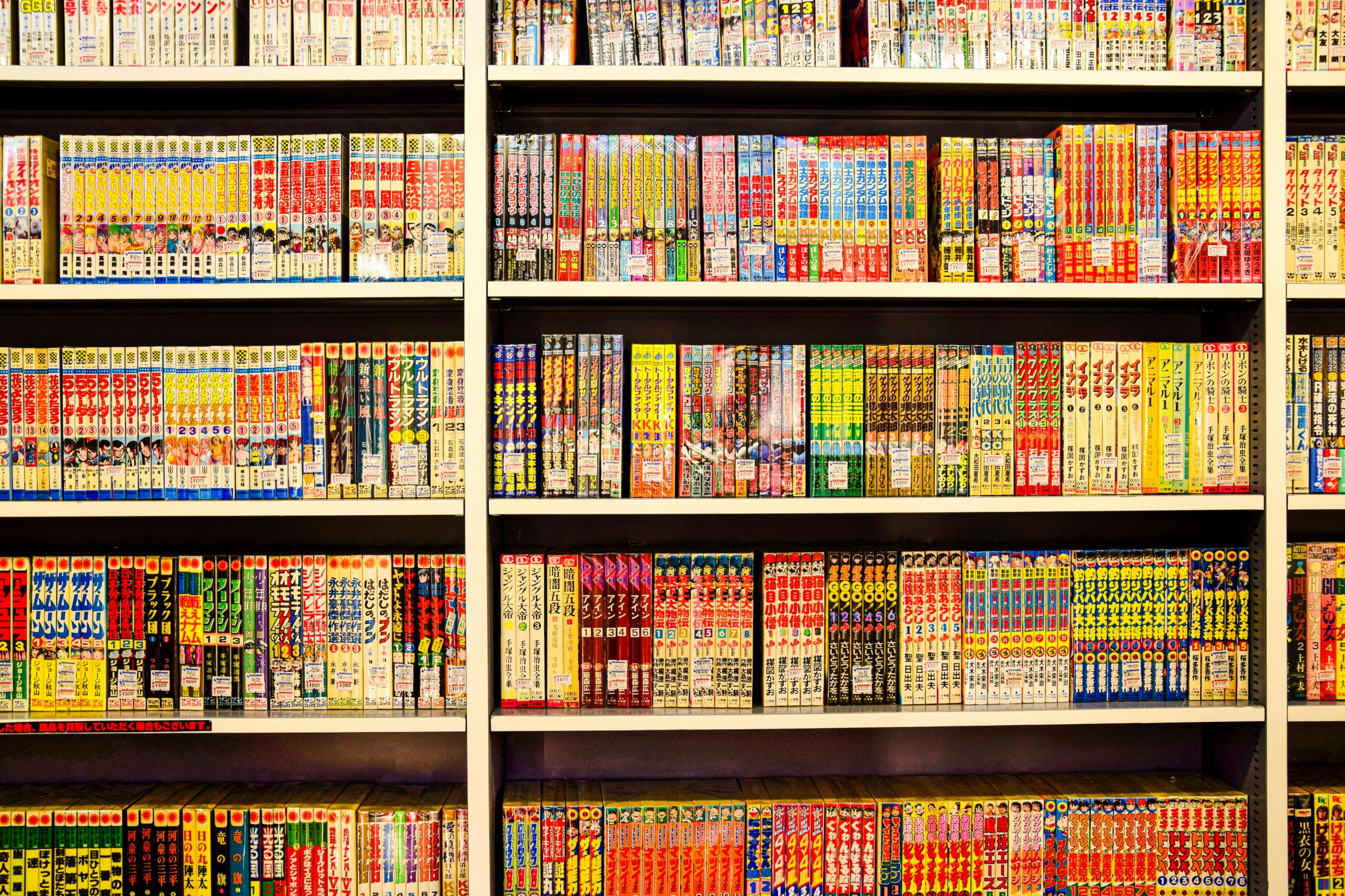
A maid cafe is a good hour in a long afternoon in Osaka’s otaku district. Around it, Den Den Town has more than 150 specialist shops selling anime figures, manga, model kits, trading cards, retro games and second-hand electronics. Super Potato on Ota Road, a temple of retro gaming, opens from about 11:00 to 20:00; Athena Nippombashi and Taito Station have floors of arcade machines, from fighting games to crane games. Our Den Den Town shopping guide maps the best of the shops and Osaka arcades covers the game centres.
Every spring the district hosts the Nipponbashi Street Festa, one of Japan’s largest cosplay events, when more than ten thousand costumed fans fill Sakaisuji Avenue for a day. Some of the maid cafes put on special events that weekend, and the street is a sight in itself. Dates are announced in advance each year. The rest of the city’s anime and manga culture, from the Characters World floor at Daimaru Umeda to the Capcom attraction at Abeno, is covered in our Osaka anime and pop culture guide.
Maid cafes with children

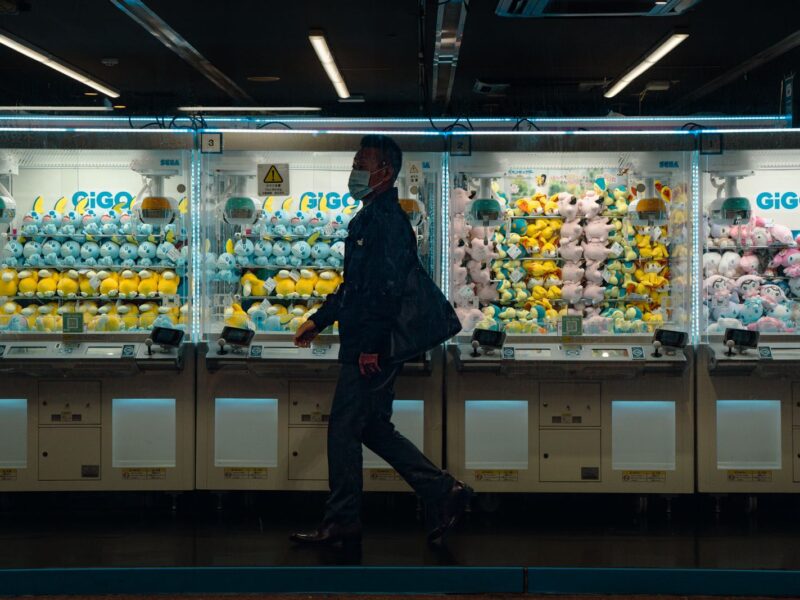
Daytime maid cafes are generally family-friendly, and children often love them: the bright colours, the cute food, the spell and a photo to take home. Go at lunchtime or in the afternoon rather than the evening, choose one of the established cafes, and check the age rules if you are going later in the day. Check whether the table charge applies to children before you sit down. Afterwards, the capsule-toy machines that line the shopfronts of Den Den Town are an easy way to end the visit on a high. More family ideas are in Osaka with kids.
Maid cafe Osaka FAQ
How much does a maid cafe in Osaka cost?
Usually ¥2,000–3,500 per person for an hour, made up of a table charge of around ¥500–800, food and drink, and optionally a photo with a maid at ¥500–1,000. Sets that bundle these together are the easiest choice on a first visit.
Where are the maid cafes in Osaka?
Almost all are in Den Den Town in Nipponbashi, along and around Ota Road, between Nippombashi and Ebisucho stations and about fifteen minutes’ walk from Namba.
Can I take photos in a maid cafe?
Not of the maids, unless you buy a cheki, the instant photo they sell. Many cafes also ban photographing the interior and other customers. Photographing your own food is usually allowed; ask first.
Do I need to speak Japanese?
No. The larger cafes, including @home cafe and Maidreamin, have English menus and staff used to explaining the system to visitors. Smaller independent cafes may have little English.
Are maid cafes suitable for children?
Daytime visits to the established cafes are generally family-friendly. Some cafes restrict under-18s in the evening, particularly where alcohol is served, so check if you are going later.
Do I need to book?
Not usually, but weekends and holidays get busy. @home cafe’s Osaka branch sells tickets online in advance, which saves a wait on peak days.
Where to go next
Maid cafes are one small corner of Osaka’s pop-culture world. Start with our Osaka anime and pop culture guide for the full picture, then the Den Den Town guide for the district itself. For more of the city’s stranger side, try unusual things to do in Osaka, and for the neighbourhood next door, our Namba guide.