This article contains advertising. Our booking links are routed through a partner that adds commission tracking automatically, so if you book through one we earn a commission from the provider, at no extra cost to you. It never affects what we recommend. Affiliate disclosure
Osaka vintage shopping is one of the city’s quiet specialities. Outside of Tokyo’s Harajuku, nowhere in Japan packs in this many thrift, secondhand and curated vintage shops, and most of them cluster within a few subway stops of each other. Amerikamura alone holds an enormous number of small stores; Orange Street next door leans designer and refined; and the artsy back-alleys of Nakazakicho, a short ride north toward Umeda, do quieter, slower browsing. Some shops ship denim and workwear straight from American warehouses. Others build their whole stock from Japanese pieces of the 60s through the 90s. A handful chase serious collectors with rare designer rails priced accordingly.
This guide walks you through the three districts, the shops worth your time in each, what you will actually find at every price tier, the difference between the American and Japanese vintage scenes, and how to string a full thrifting day together without backtracking.

Why Osaka does vintage so well
It is no accident that the rails here run so deep. Japan developed an obsessive secondhand culture decades ago, built on a respect for condition and provenance that the West has only recently caught up with. Buyers from Osaka and Tokyo have spent years combing American thrift stores and estate sales, shipping the best of it home by the container. The result is that a faded 1970s sweatshirt in better nick than you would find in its country of origin often ends up on a rack in Amemura. Add a domestic obsession with denim, the country’s celebrated selvedge mills, and a designer scene that produced Issey Miyake and Comme des Garçons, and you get a market with both imported Americana and home-grown rarity. That is the short version of why a city this far from anywhere has become a pilgrimage for vintage hunters.
The three districts, and which one is for you
They sit close together but feel nothing alike. Pick by mood as much as by stock.
Amerikamura, or Amemura, the headline
This is the largest vintage clothing quarter in Osaka, a dense grid of shops covering fashion, accessories, secondhand oddities and street food. The energy is teenage and loud, somewhere between a skate park and a fashion-week afterparty. Triangle Park at its centre is the meeting point and the people-watching spot, and a useful landmark when the side streets blur together. Come here for American 80s and 90s vintage, streetwear, and the sheer thrill of volume.
- Best for: American 80s-90s vintage, streetwear, a young scene.
- Most shops open: 11:00 to 20:00.
- Time needed: two to three hours, minimum.
- Stations: Yotsubashi or Shinsaibashi, both a couple of minutes’ walk.
Orange Street, or Tachibana-dori
Three minutes’ walk from Triangle Park and a world away in tone. Orange Street is the grown-up version: designer finds, modern boutiques, mid-century furniture, and good coffee. Prices climb, the racks thin out, and the curation gets sharper. If Amerikamura felt like wading, this feels like browsing. Worth it for anyone past the graphic-tee phase.
Nakazakicho, the slow one
An old residential pocket right next to Umeda, threaded with narrow lanes and low wooden houses that escaped wartime bombing. The vintage shops here share space with cafes and tiny galleries, and the whole neighbourhood moves at half the speed of Amemura. Many of the buildings are converted machiya townhouses, so you shop in someone’s former front room, ducking under low doorways to reach the back rails. It is the place to come when you want to browse without elbows in your ribs, and the cafes are good enough to make a morning of it. Nakazakicho is one of several neighbourhoods most visitors never reach, and our guide to the quieter corners of Osaka maps the others, from half-forgotten shrines to rose gardens locals keep to themselves.
- Station: Nakazakicho on the Tanimachi line, or a ten-minute walk from Umeda.
- Time needed: one to two hours.

The shops worth your time
You could spend a day just opening doors at random in Amemura and do fine. But these are the names regulars send people to.
- JAM, Amerikamura. Around 110 tsubo of floor space, roughly 360 square metres, with something like 8,000 items on the rails. Heavy on 80s and 90s pieces. The biggest single vintage shop in the city, and the obvious first stop.
- Pigsty, Amemura. Used clothing spanning the 30s to the 80s, plus antique goods, jewellery, kids’ pieces and sneakers. Deeper history than most, and a place to find something genuinely old.
- 2nd Street. The big Japanese secondhand chain, with several Amerikamura branches. Reliable rather than exciting, good for filling gaps at fair prices.
- Big Step. A multi-floor complex of streetwear and vintage stalls under one roof, easy to lose an hour in.
- Buster Brown. Tightly curated and premium-priced; you pay for someone else’s eye.
- Trade. Designer-focused, with pieces from major Japanese labels for people who know what they are hunting.
- Roomie Vintage, Nakazakicho. Mid-century home goods alongside the clothing, in keeping with the neighbourhood.

What you will find on the rails
- American workwear: vintage Levi’s, Carhartt and Wrangler, the stuff that drew Japanese collectors to US warehouses in the first place.
- 80s and 90s streetwear: sportswear, oversized graphic tees, college and team pieces.
- Japanese designer vintage: Issey Miyake, Comme des Garçons, Yohji Yamamoto, the holy trinity for serious buyers.
- Sneakers: vintage Nike, Adidas and Reebok, including hard-to-find releases.
- Accessories: jewellery, watches, sunglasses, bandanas.
- Mid-century furniture: mostly on Orange Street and in Nakazakicho.
- Film cameras: at the electronics-and-vintage hybrid shops.
- Records: vinyl, often tucked in alongside the clothing.
Beyond clothes: records, cameras and odds
Not everyone comes for denim. Osaka’s vintage scene quietly serves crate-diggers and camera nerds too. Several Amemura shops keep a wall of vinyl at the back, strong on city pop, jazz and 70s funk, the genres Japanese collectors have long obsessed over. Film photographers will find used camera shops scattered through the district carrying Olympus, Canon and Nikon bodies, sometimes at prices that have crept up as film made its comeback, but with stock and condition you rarely see at home. There is also a steady trade in vintage Americana ephemera, old signage, lighters, tableware, the kind of thing that fills a corner shelf rather than a wardrobe. If clothing is not your thing, you will still find a reason to linger.

American vintage versus Japanese vintage
The distinction matters once you are buying seriously. American vintage in Osaka skews toward 60s-to-90s casual and workwear: faded denim, sun-bleached tees, broken-in jackets, the imported-from-the-States aesthetic. Japanese vintage is a different animal. It centres on home-grown designers, Issey Miyake’s pleats, Comme des Garçons’ deconstruction, Yohji Yamamoto’s black tailoring, alongside 80s and 90s street styles that never left Japan. Plenty of shops blend both. But if you have a target, knowing which scene a shop belongs to saves you a lot of fruitless rail-flicking.
What it costs
- Budget, ¥1,500 to ¥4,000: standard secondhand pieces, the bread and butter of the chains.
- Mid-range, ¥4,000 to ¥10,000: curated, better-condition pieces with some thought behind them.
- Premium designer, ¥10,000 to ¥30,000: verified Japanese designer or strong American vintage.
- Collector tier, ¥30,000 and up: rare pieces, often with documentation.
Prices are fixed. This is not a market, and trying to haggle will get you a polite, blank look. The value comes from the hunt, not the negotiation.
A full thrifting day
- 11:00: Out at Yotsubashi Station, walk into Amerikamura.
- 11:15: Triangle Park for a scene check and a coffee.
- 11:30 to 13:00: JAM, then Pigsty, then a 2nd Street branch.
- 13:00: Lunch at an Amemura cafe.
- 14:00: Orange Street for the refined boutiques and furniture.
- 15:30: Train north to Nakazakicho, about ten minutes.
- 16:00: Ninety minutes among the quiet Nakazakicho shops.
- 17:30: Train back to central Osaka, bags fuller than planned.
Tips that save you grief
- Try everything on. Japanese vintage sizing runs small and inconsistent next to US and EU labels; the tag is a suggestion, not a promise.
- Carry cash. Plenty of the smaller shops take nothing else.
- Start after 11:30. Most shops open at 11:00, and the full selection is not out before then.
- Check tax-free before you buy. The bigger stores offer it on ¥5,000-plus purchases with a passport; the tiny boutiques often do not.
- Inspect for flaws in daylight. Vintage means used; check seams, pits and hems near the door where the light is better.
- Do not haggle. Prices are set.
- Bring a tote. Three districts of buying adds up.
Osaka vintage shopping FAQ
Where is the best vintage shopping in Osaka?
Amerikamura for sheer volume and the youngest scene, Orange Street for refined designer boutiques, and Nakazakicho for quiet, curated browsing. Most serious shoppers do at least two of the three in a day.
How much does Osaka vintage cost?
Budget pieces run ¥1,500 to ¥4,000, mid-range curated stock ¥4,000 to ¥10,000, and verified designer pieces ¥10,000 to ¥30,000 or more.
Is Osaka vintage authentic?
Mostly, yes. The premium pieces, Japanese designer and rare American, often come with documentation, and the major chains run authentication processes. As ever with secondhand, buy from a shop with a reputation when you are spending real money.
Can I get tax-free shopping?
At the larger stores, yes, on purchases of ¥5,000 or more with your passport. Smaller boutiques frequently do not offer it, so ask before you commit if it matters to you.
How long should I plan?
Half a day covers one district comfortably. A full day lets you pair Amerikamura with Nakazakicho and still stop for lunch.
What is the difference between American and Japanese vintage?
American vintage here skews 60s-90s casual and workwear. Japanese vintage centres on designers like Issey Miyake, Comme des Garçons and Yohji Yamamoto, plus 80s and 90s street styles unique to Japan.
Plan the rest of your Osaka shopping
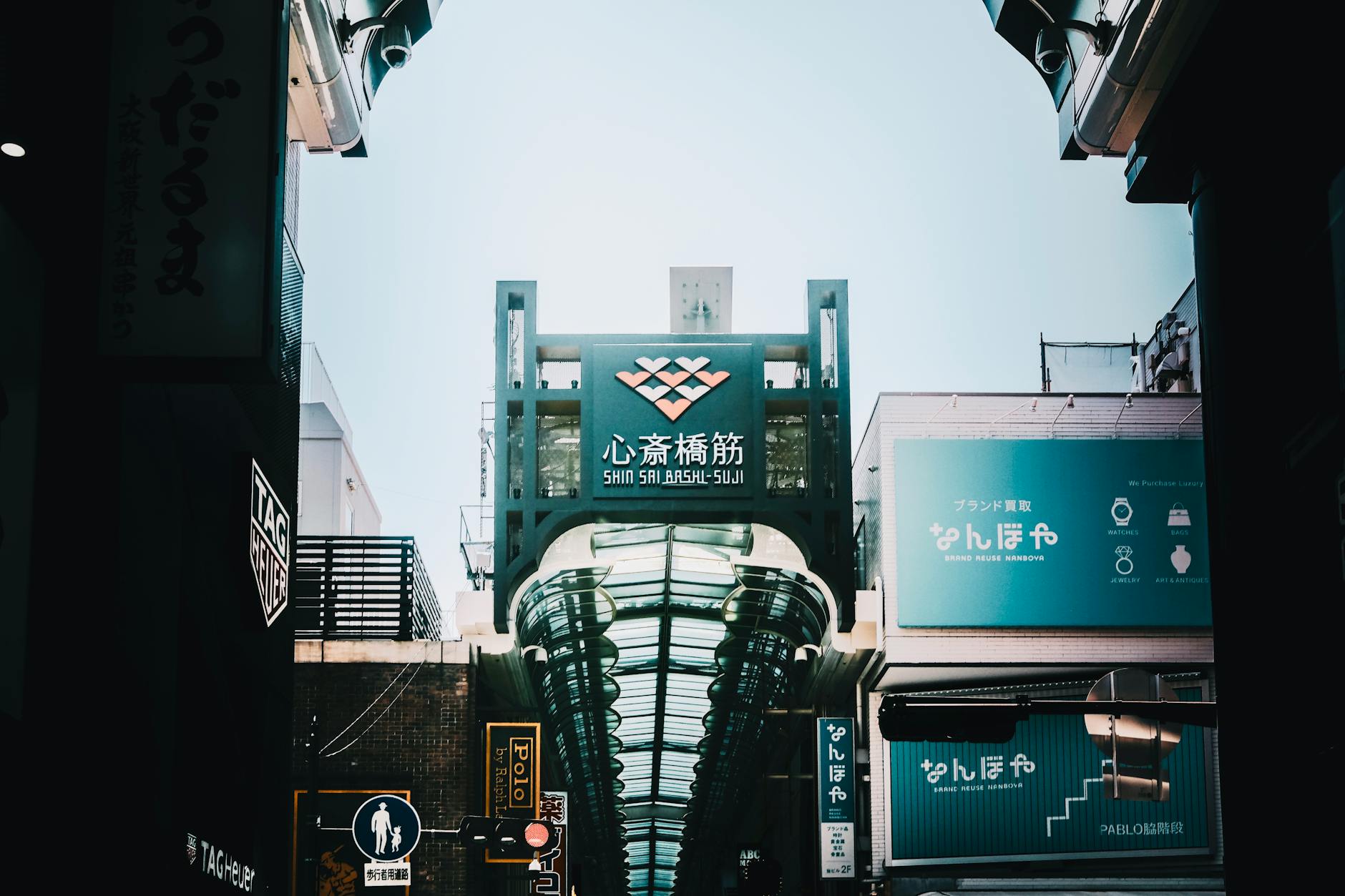
The vintage quarter sits inside a much larger district worth exploring, covered in our Amerikamura neighbourhood guide. From there it is a short walk to the covered arcade, where our Shinsaibashi shopping guide picks up the chains and department stores. For the wider view of where to spend in the city, start with our Osaka shopping guide.