This article contains advertising. Our booking links are routed through a partner that adds commission tracking automatically, so if you book through one we earn a commission from the provider, at no extra cost to you. It never affects what we recommend. Affiliate disclosure
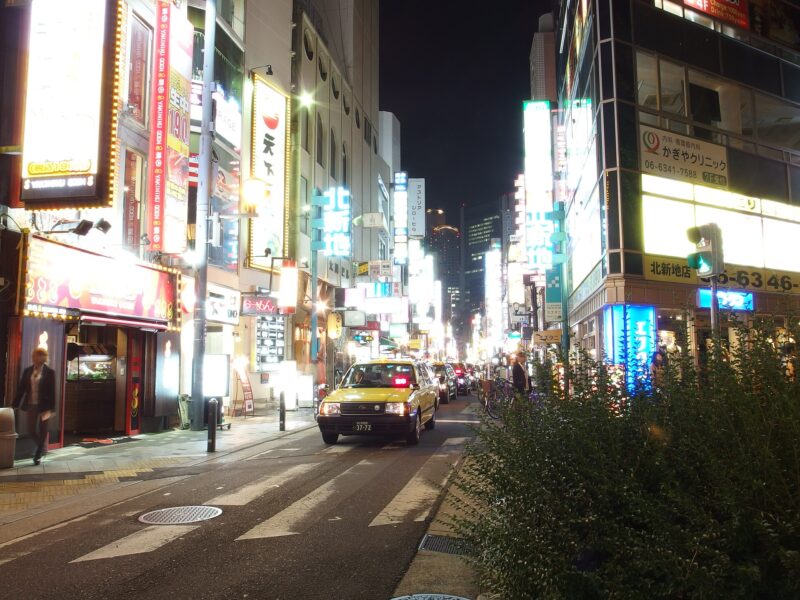
Walk through Dotonbori in the evening and you will see the word “wagyu” a hundred times: on skewer stalls, on laminated menus outside basement yakiniku joints, on burger signs, on sushi counters, in English, Chinese and Korean. Some of it is the real thing, cooked well and fairly priced. Some of it is ordinary beef with an expensive word attached. And some of it is genuinely superb meat at a genuinely staggering price. Telling these apart is most of what eating wagyu in Osaka is about.
This guide to wagyu Osaka explains what the labels actually mean, from “wagyu” and “A5” to certified Kobe beef, the different ways to eat it and which suit which budget, where to find it in the city, what it costs, and how to avoid paying Kobe prices for something that is not. If you are here for yakiniku specifically, our yakiniku and Tsuruhashi guide goes deeper on that; this page is about the beef itself.
Wagyu, Kobe beef and A5: what the words mean
Wagyu
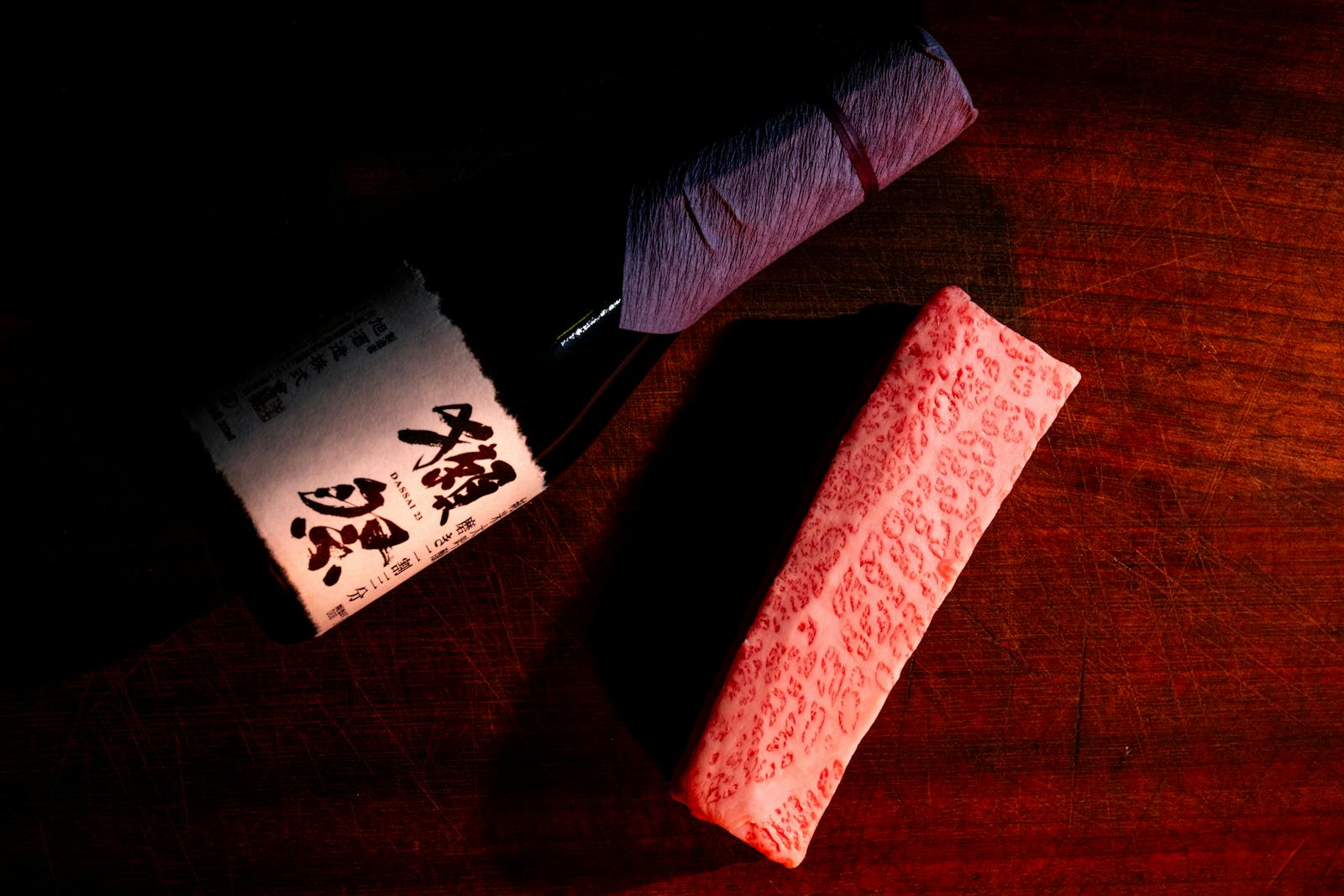
Wagyu simply means “Japanese cattle”, and it refers to four native breeds: Japanese Black, Japanese Brown, Japanese Poll and Japanese Shorthorn. The famous marbled beef almost always comes from Japanese Black, kuroge wagyu, which is the word to look for on a menu if you want the rich, fat-streaked meat that wagyu is known for. “Wagyu” alone tells you the breed, not the quality: a wagyu steak can be good, ordinary or excellent.
The grade: what A5 means
Japanese beef carcasses are graded by the Japan Meat Grading Association on two scales, and the grade you see on menus combines them.
- The letter (A, B or C) is the yield grade: how much usable meat the carcass gives. A is the highest. It says nothing about taste.
- The number (1 to 5) is the meat quality grade, judged on marbling, colour and brightness, firmness and texture, and the colour and quality of the fat. 5 is the highest.
So A5 means the top yield grade and the top quality grade. Within quality, marbling is measured on the Beef Marbling Standard, or BMS, a scale from 1 to 12. A5 is a real and meaningful grade, but it is not a brand and not a place: A5 beef can come from anywhere in Japan, and a menu that says “A5 wagyu” is telling you the grade, not that it is Kobe beef.
Kobe beef
Kobe beef is a brand with strict rules, and it is certified by the Kobe Beef Marketing and Distribution Promotion Association. To qualify, the meat must come from a Tajima steer or virgin cow, a strain of Japanese Black, born in Hyogo Prefecture, raised by a designated farmer in Hyogo and slaughtered there. On top of that, the carcass must meet the association’s standards: yield grade A or B, a meat quality grade of 4 or higher, BMS No. 6 or higher, and a carcass weight within set limits.
That makes it rare. The association’s own FAQ gives a figure of about 5,500 certified Kobe beef cattle a year from around 7,000 Tajima cattle, and puts Kobe beef at under about 0.2% of the beef eaten in Japan. Each certified carcass is stamped and issued a certificate of authenticity, and every piece of Kobe beef carries a 10-digit individual identification number that shops and restaurants can show you and that you can look up. Restaurants designated by the association display a small bronze statue of a bull.
The practical upshot: a restaurant that sells Kobe beef should be able to show you the number, and the association publishes a list of its certified restaurants, searchable by prefecture, on its website. If a cheap stall is selling “Kobe beef” with no number in sight, be sceptical.
Matsusaka, Omi and other brands
Kobe is a well-known name abroad, but it is not the only regional brand. You will see Matsusaka beef, from Mie Prefecture, on menus in Osaka, and Omi beef from Shiga, and many prefectures have their own branded wagyu. Each has its own association and its own rules, so treat the name as a brand claim and ask the restaurant about it. The point for a visitor is that excellent wagyu does not have to say “Kobe”.
How to eat it: the main styles
The way wagyu is cooked changes the experience more than the grade does, and each style has a different price point.
Teppanyaki steak
A chef cooks your steak on an iron griddle in front of you, usually as part of a set course with vegetables, garlic chips and rice. It is a classic way to eat Kobe beef, very theatrical, and usually among the most expensive. A fillet or sirloin is the standard order. Because marbled wagyu is so rich, a smaller portion of a higher grade is a better plan than a large steak of a lower one.
Sukiyaki
Thin slices of beef are cooked in a shallow iron pan with a sweet soy-based sauce, then dipped in raw beaten egg. Kansai-style sukiyaki traditionally starts by searing the meat with sugar and soy rather than simmering it in a ready-made broth, and the result shows off marbled beef beautifully. It is a very good way to taste wagyu, and Osaka has a well-known place to do it (below).
Shabu-shabu
Paper-thin slices swished through simmering broth for a few seconds, then dipped in sesame or ponzu sauce. Lighter than sukiyaki, and a good choice if very fatty beef is too much for you, because some of the fat renders into the broth.
Yakiniku
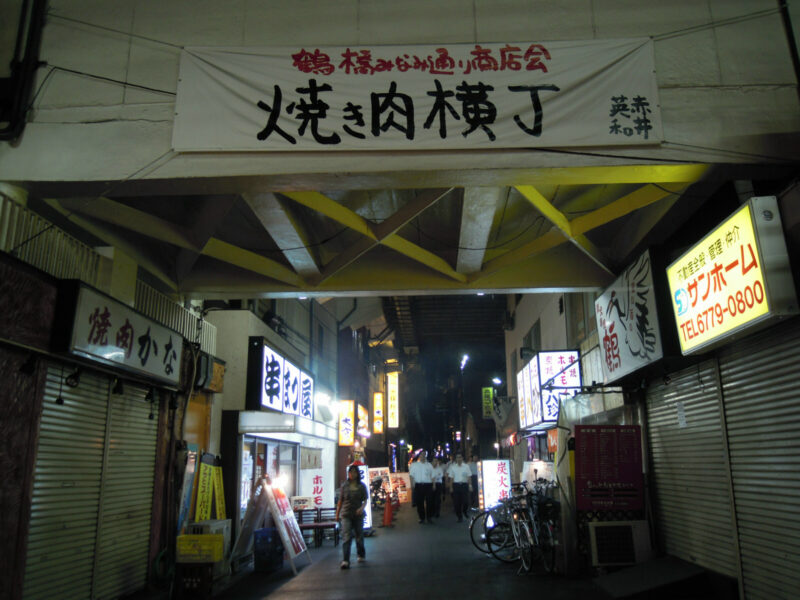
You grill bite-sized cuts yourself over a gas or charcoal grill at the table. It is the most sociable and often the best value way to try several cuts and grades in one meal. Our yakiniku guide covers how to order and where to go.
Gyukatsu
A breaded, quickly fried beef cutlet, served rare inside, which you finish on a small hot stone at the table. It is a newer style and good value for a casual lunch, though the beef in most gyukatsu shops is not top-grade wagyu, so read the menu.
Street skewers and wagyu sushi
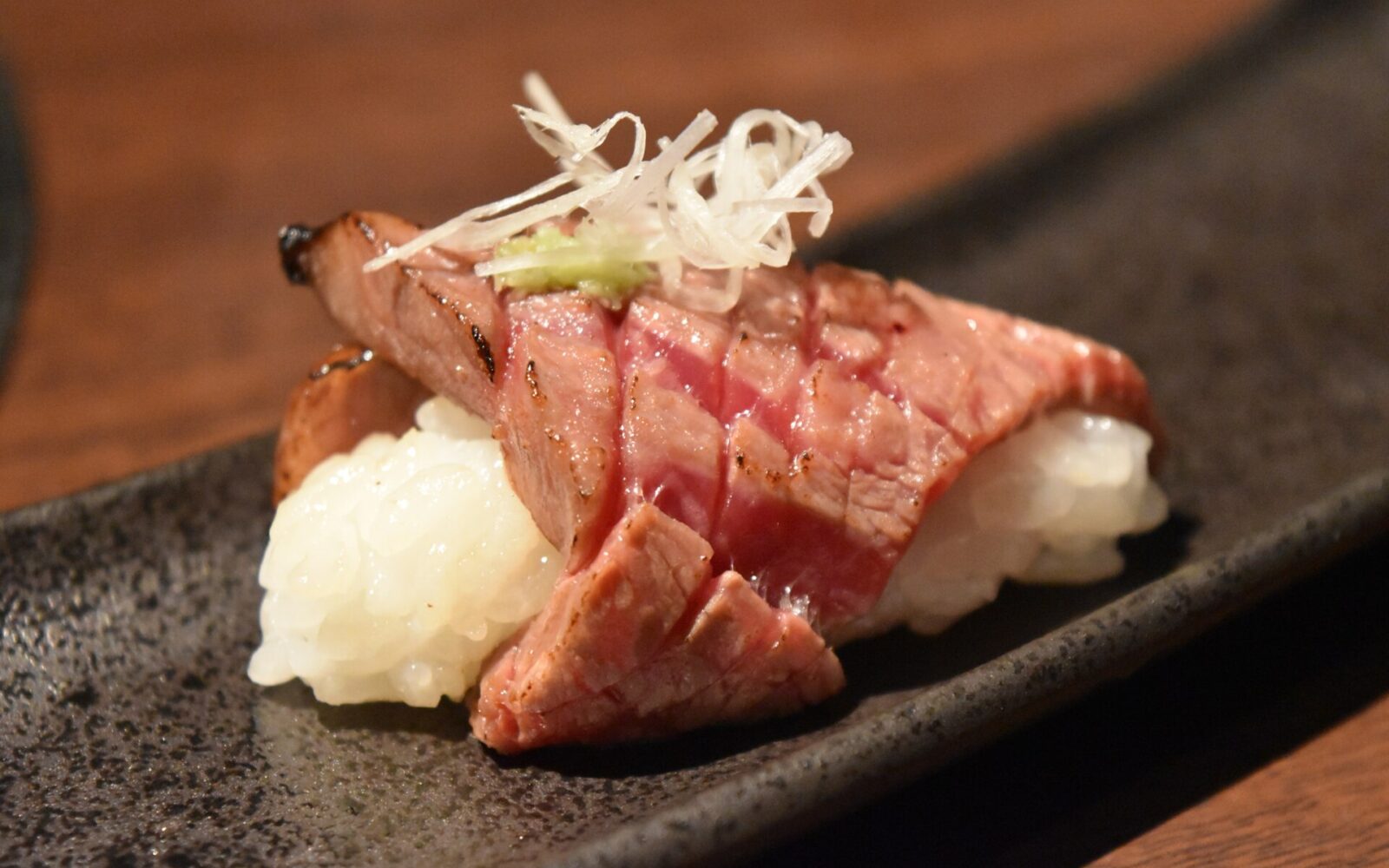
Kuromon Market and the Dotonbori area are full of grilled wagyu skewers and aburi wagyu nigiri, seared beef on rice. They are fun, quick and photogenic, and they are not cheap for what you get. Treat a skewer as a snack and an experience, not as a way to save money on a wagyu meal. Our Kuromon Market guide has more on the market, and Osaka street food on what else to graze on.

Where to eat wagyu in Osaka
Harijyu, Dotonbori: sukiyaki and shabu-shabu
If you only eat one wagyu meal in Osaka, make it here. Harijyu has been serving beef in Dotonbori since 1948, and the company gives 1919 as the year it opened its first shop, in Sakai. Its main restaurant, at 1-9-17 Dotonbori, serves sukiyaki and shabu-shabu in a traditional Japanese setting, and the beef is female Kuroge Wagyu.
- Lunch: sukiyaki or shabu-shabu lunch, ¥6,600, rising to ¥7,150 from 1 November 2026. 11:30am to 3:30pm, last order 2:30pm.
- Dinner: sukiyaki and shabu-shabu courses from ¥8,800 to ¥19,800, including tax and service, with some prices revised from November 2026. 5pm to 9pm, last order 8pm.
- Closed: Tuesdays, except on public holidays and in December.
- Booking: reservations for two or more, online through the restaurant’s website.
- Paying: major credit cards accepted, including Visa, Mastercard, Amex, JCB, Diners and UnionPay; no QR-code payment.
On the ground floor of the same building, Harijyu Grill serves Kuroge Wagyu steaks from ¥6,600 and a fillet cutlet for ¥3,850, tax included, and is also closed on Tuesdays. Harijyu also has shops at Hanshin Umeda and Daimaru Shinsaibashi. The lunch course is the smart move: the same beef and the same room for considerably less than dinner.
Certified Kobe beef restaurants
The Kobe Beef association’s list of designated restaurants in Osaka Prefecture includes these, among others. The list confirms that they are certified to sell Kobe beef; check each restaurant’s own site or booking page for current hours and prices.
| Restaurant | Area | Style |
|---|---|---|
| Kobe-gyu Wanomiya, Dotonbori main branch | Dotonbori | Kobe beef restaurant |
| Kobe-gyu Steak Zin, Namba | Dotonbori (Fruit Tower, 8F) | Steak and teppanyaki |
| Kobe-gyu Steak Ken | Shinsaibashi-suji | Steak |
| Kobe-gyu Sukiyaki Gyujin | Higashi-Shinsaibashi | Sukiyaki |
| Tajimaya (Namba City and Yodobashi Umeda) | Namba, Umeda | Shabu-shabu and sukiyaki |
| Kobe-gyu Steak Murakami | Grand Front Osaka South, 8F, Umeda | Steak |
| Osaka Teppanyaki Tatara | Sonezaki, Umeda | Teppanyaki |
| Itamae Yakiniku Isshou, Kitashinchi Rikyu | Kitashinchi | Yakiniku |
| Ashiya Takezono, Umeda Hankyu | Hankyu Umeda department store | Kobe beef shop |
Because the list is published by the association and searchable, it is the best way to check a restaurant that claims to serve Kobe beef. If a place is not on it, ask to see the certificate or the 10-digit number before you order.
Kitashinchi: the high end
For special-occasion steak and teppanyaki, Kitashinchi, the upmarket dining district south of Osaka Station, is where Osaka’s expense-account crowd eats, and it has many high-end beef restaurants. Prices match. Our Kitashinchi guide explains the area, and Michelin-starred restaurants in Osaka covers the starred end of the city’s dining.
Department stores: wagyu to take away
Osaka’s department store food halls sell wagyu by the gram, as well as beef bento and sandwiches. Ashiya Takezono’s counter in the Hankyu Umeda department store is on the Kobe Beef association’s list. If you have a kitchen in an apartment, buying a small piece of high-grade beef and cooking it yourself is a cheaper way to taste top-grade wagyu; our Osaka department stores guide covers the food halls.
What wagyu costs in Osaka
Prices vary enormously, from a few hundred yen for a skewer to several tens of thousands of yen for a certified Kobe beef teppanyaki course. At Harijyu, the sukiyaki or shabu-shabu lunch is ¥6,600 (¥7,150 from November 2026) and dinner courses run from ¥8,800 to ¥19,800. Certified Kobe beef teppanyaki generally sits above that, so check the course prices on the restaurant’s own site before you book.
A few ways to get more for your money:
- Eat wagyu at lunch. Many beef restaurants offer lunch sets at a fraction of their dinner prices, with the same beef.
- Choose sukiyaki or shabu-shabu over steak if you want quality without the steakhouse bill. Thin slices go further.
- Order less, of a better grade. Heavily marbled beef is so rich that most people are happy with less than they would eat of a Western steak.
- Use yakiniku to try several cuts in one sitting for less than a single steak.
- Check whether prices include tax and service, and whether a steak price is per 100 grams or per portion. A menu that lists beef by the gram can add up quickly.
Our Osaka trip cost guide puts these figures in the context of a whole trip’s food budget.
How not to be fooled
Many restaurants in Osaka are honest about what they sell. The problems tend to cluster in the most touristy streets, where the word “wagyu” or “Kobe” is doing a lot of work. A few checks help:
- “Kobe beef” should come with a number. Certified Kobe beef has a 10-digit identification number, and certified restaurants are on the association’s list. No number, no list, no certificate: assume it is not Kobe beef.
- “A5” is a grade, not a brand. A5 is good. It is not the same as Kobe.
- “Wagyu” is a breed, not a guarantee. Look for kuroge wagyu, Japanese Black, if you want the marbled beef.
- A very low price is a signal. Top-grade wagyu is expensive everywhere in Japan. A “Kobe beef” steak at a fraction of what certified restaurants charge should make you ask questions.
- Ask. It is normal to ask which brand, which grade and which cut. Good restaurants are proud to tell you.
Reading the menu: wagyu cuts in Japanese
Beef menus in Osaka often give the cut in Japanese, sometimes in katakana borrowed from English, and the cut matters as much as the grade. The ones you will meet most often:
- Hire (fillet or tenderloin): the leanest and most tender cut, and the safe choice if you find very fatty beef too much. Usually the most expensive steak on a teppanyaki menu.
- Sāroin (sirloin): richer and more marbled than fillet, with more flavour. The classic Kobe beef steak.
- Rōsu (loin, from the shoulder or ribs): the word you will see most at sukiyaki and shabu-shabu restaurants, where the thin slices show off the marbling.
- Karubi (short rib or belly): fatty, flavourful and the core of a yakiniku order.
- Harami (skirt): technically offal, beefy and good value on the grill.
- Misuji and zabuton: prized shoulder cuts that turn up as specials at yakiniku and teppanyaki restaurants, often in small portions.
- Tan (tongue): a yakiniku favourite, usually grilled thin with salt and lemon. Delicious, but not necessarily wagyu, so check.
Two words worth recognising for what they do not say: kokusan-gyu means beef raised in Japan, which can be from any breed, and “Japanese beef” in English on a menu may mean the same. Neither is a promise of wagyu.
At a teppanyaki counter: how the meal works
A teppanyaki dinner is the most formal way to eat wagyu, and it helps to know the shape of it before you sit down. You are seated at a counter around a large iron griddle, and a chef cooks for your group. Most restaurants sell set courses, which typically start with a small appetiser, soup or salad and grilled seafood or vegetables before the beef arrives. You choose the cut and often the weight when you order, and the chef will ask how you want it cooked; medium-rare suits marbled beef, because the fat needs a little heat to soften. The steak is cut into bite-sized pieces on the griddle and served with garlic chips, salt, mustard or a dipping sauce. Many courses finish with garlic fried rice made on the same griddle, then dessert and coffee, sometimes in a separate lounge.
Book ahead, arrive on time, and tell the restaurant about allergies when you book. There is no need to tip in Japan, and the price on the course menu is usually what you pay, though some high-end restaurants add a service charge, so check whether the course price includes it.
A wagyu evening in Dotonbori
- Early evening: walk the canal and the neon of Dotonbori while it is still light enough to see the river.
- Dinner: sukiyaki at Harijyu, booked ahead, or a certified Kobe beef steak at one of the restaurants on the association’s list in Dotonbori and Namba.
- After dinner: a drink in the lanes of Hozenji Yokocho, a few minutes’ walk away, or the bars of Ura-Namba. Our Dotonbori after dark guide has the details.
Should you go to Kobe instead?
Kobe is a short train ride from Osaka, and eating Kobe beef in Kobe has an obvious appeal. The city has many certified restaurants, and a day there combines the beef with the harbour, Kitano’s old foreign residences and Mount Rokko. Steak Misono, which says it has served teppanyaki steak since 1945, has branches in Kobe but not in Osaka. Our Kobe day trip guide and Osaka to Kobe transport guide cover the trip.
But you do not need to go to Kobe to eat Kobe beef. Osaka has certified restaurants of its own, and the price of the beef does not drop much just because you are closer to the farms. Go to Kobe for Kobe, and eat the beef wherever it suits your day.
Wagyu Osaka FAQ
Is Kobe beef the same as wagyu?
All Kobe beef is wagyu, but very little wagyu is Kobe beef. Kobe beef must come from Tajima cattle born and raised in Hyogo Prefecture, meet strict grading standards and be certified by the Kobe Beef Marketing and Distribution Promotion Association.
What does A5 mean?
A is the top yield grade, which measures how much meat the carcass gives, and 5 is the top meat quality grade, which judges marbling, colour, texture and fat. A5 is the highest combined grade, but it is not a brand: A5 beef can come from anywhere in Japan.
How much does wagyu cost in Osaka?
From a few hundred yen for a market skewer to tens of thousands of yen for a certified Kobe beef teppanyaki course. At Harijyu in Dotonbori, a sukiyaki or shabu-shabu lunch is ¥6,600, rising to ¥7,150 from 1 November 2026, and dinner courses run from ¥8,800 to ¥19,800.
Do I need to book?
For dinner at a well-known beef restaurant, yes, especially on weekends. Many take online bookings; Harijyu takes reservations for two or more people through its website.
Is it cheaper to eat Kobe beef in Kobe?
Not necessarily. Kobe has many certified restaurants to choose from, but the beef is expensive wherever you eat it. Osaka has certified Kobe beef restaurants too, listed on the Kobe Beef association’s website.
Is the wagyu at Kuromon Market real?
Some of it is real wagyu, but stalls vary, and a skewer labelled “Kobe beef” should come with the 10-digit identification number. Ask what the cut, grade and brand are before you pay, and treat it as a snack rather than a full wagyu meal.
Where to eat next
Our Osaka food guide covers the city’s whole food scene, with yakiniku, sushi, okonomiyaki and kushikatsu in their own guides. For the evening around your wagyu dinner, see Dotonbori, and for something lighter the next day, cheap eats in Osaka.
Photo Credits
Matsusaka beef sushi in Osaka: Matsusaka Beef Sushi (183622615) by Andrew Currie, CC BY-SA 3.0, via Wikimedia Commons.