This article contains advertising. Our booking links are routed through a partner that adds commission tracking automatically, so if you book through one we earn a commission from the provider, at no extra cost to you. It never affects what we recommend. Affiliate disclosure
Osaka Tenmangu Shrine is the scholar’s shrine of Osaka, founded in 949 AD and dedicated to Sugawara no Michizane (845-903) – the Heian-period scholar, poet and politician deified after his death as Tenjin, the Shinto god of learning, scholarship and the performing arts. Each year before exam season the shrine fills with thousands of student-written ema (wooden votive plaques) praying for academic success. But Osaka Tenmangu is most famous for the Tenjin Matsuri (July 24-25), one of Japan’s three biggest festivals along with Kyoto’s Gion and Tokyo’s Kanda. With 1.5+ million attendees, a 1,000-year history, a 3,000-person land procession in Heian and Edo costume, a 100-boat river procession, and 5,000 fireworks – this is one of Japan’s three great festivals. Outside those two days it is a quiet 30-minute stop, and one of the easiest to reach in our roundup of Osaka’s historic shrines – five minutes on foot from Minamimorimachi Station. This 2026 guide covers visiting any time of year plus the festival.

Quick Facts: Osaka Tenmangu Shrine
- Address: 2-1-8 Tenjinbashi, Kita-ku, Osaka 530-0041
- Access: 5-min walk from Minamimorimachi Station (Osaka Metro Tanimachi Line / Sakaisuji Line); 5-min walk from Osaka Tenmangu Station (JR Tozai Line)
- Hours: 09:00-17:00 daily (grounds accessible earlier)
- Admission: FREE
- Founded: 949 AD
- Deity: Sugawara no Michizane (Tenjin) – god of learning, scholarship, performing arts
- Visit duration: 30-45 minutes
- Festival: Tenjin Matsuri July 24-25 (one of Japan’s top 3)
Who Was Sugawara no Michizane?
Sugawara no Michizane (845-903) was a Heian-period scholar, poet, statesman and Confucian philosopher who reached the second-highest rank in the imperial court before being framed in a political conspiracy and exiled to Dazaifu in Kyushu, where he died in 903. After his death, a series of natural disasters and deaths among his political enemies were attributed to his vengeful spirit, and the imperial court posthumously restored his rank and built shrines (Tenmangu) to appease and honor him.
Today Michizane is worshipped as Tenjin, the kami of learning. There are over 12,000 Tenmangu shrines across Japan, of which Osaka Tenmangu and Dazaifu Tenmangu (Kyushu, where he died) are the two most important.
What to See at Osaka Tenmangu Shrine
The Honden (Main Hall)
The current main hall dates from 1843 – one of the few buildings to survive the 1945 firebombing. It’s a polished example of Edo-era shrine architecture. The interior is closed to visitors but can be viewed from the prayer hall.
The Bokuhansha Bull Statue
A bronze bull stands in front of the main hall – touching its head is said to bring wisdom and academic success. Students rub the head before exams; over the centuries, the head has been polished smooth.
The Ema Wall
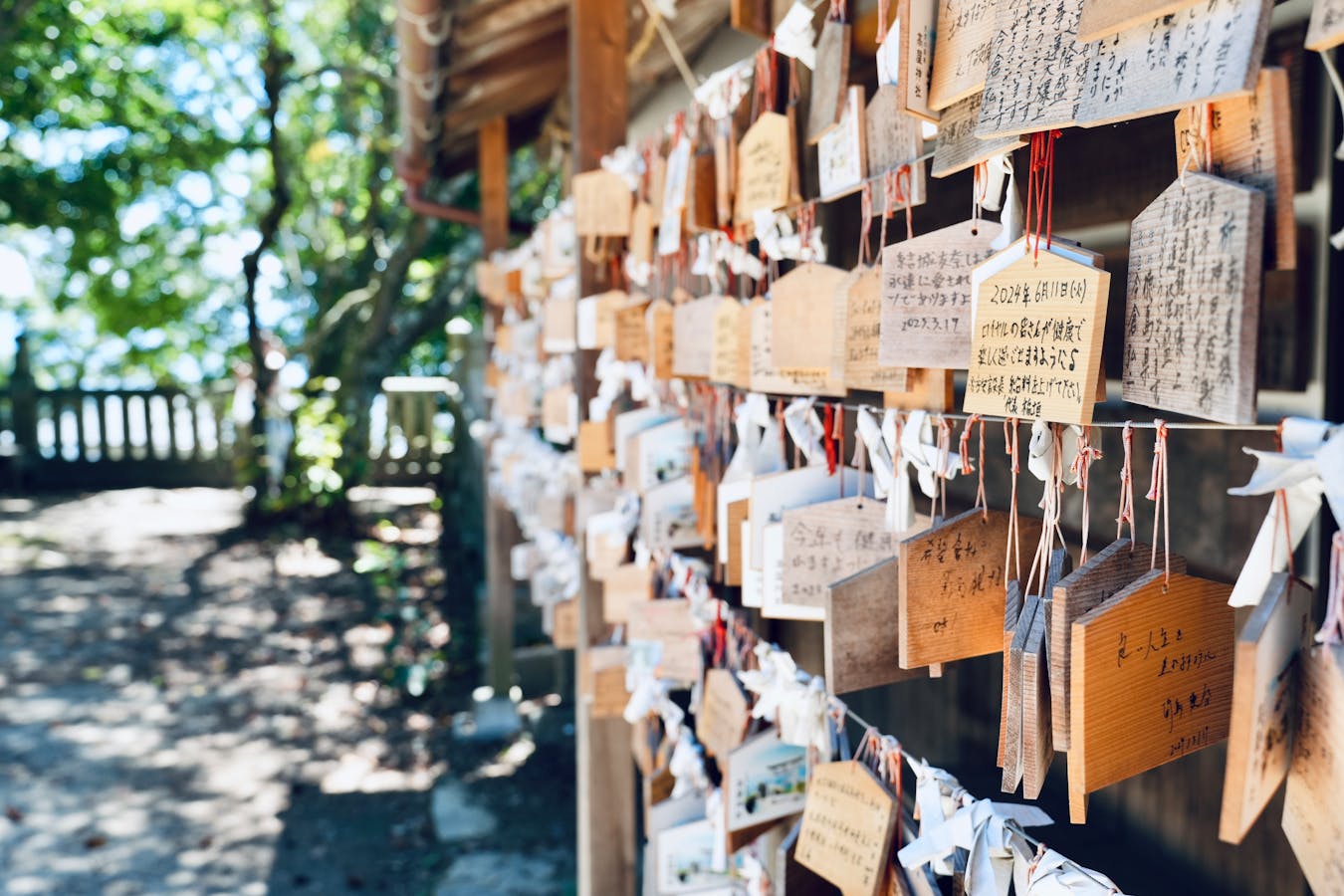
Thousands of small wooden plaques (ema) cover the racks – mostly written by students wishing for exam success. Buy a blank ema (JPY 500-1,000), write your wish on the back, and hang it on the rack. The density of student wishes peaks January-February before national university entrance exams.
The Plum Grove (Ume)
Plum blossoms (ume) were Sugawara no Michizane’s favorite flower and are the symbol of all Tenmangu shrines. Osaka Tenmangu has approximately 50 plum trees that bloom in February-early March. The annual plum festival runs late January through early March – less famous than the Tenjin Matsuri but photographically rewarding and free.
Tenjin Matsuri (July 24-25)
The Tenjin Matsuri is one of Japan’s three biggest festivals (with Kyoto’s Gion Matsuri and Tokyo’s Kanda Matsuri). 1,000+ year history. 1.5+ million attendees. The festival takes place over two days each July. It anchors the Osaka summer, and Osaka’s other big festivals fill in the rest of the year, from Doya-Doya in January to Sumiyoshi Matsuri on August 1.
July 24 (Yoimiya – Opening Day)
Religious ceremonies at the shrine; the smaller “Hokonagashi-shinji” rite where a halberd is floated down the Okawa River to determine the route of the next day’s procession.
July 25 (Honmiya – Main Day)
- 15:30 onwards: Land procession (Rikutogyo) – 3,000 participants in Heian-era and Edo-era costumes carry sacred regalia from the shrine through Osaka streets. Includes 12 ox carts, lion dancers, court musicians.
- 17:00 onwards: River procession (Funatogyo) – 100 boats including 6 ceremonial boats and 6 musical boats parade up and down the Okawa River with the deity riding aboard. The musical boats play traditional shrine music and Edo-era ballads.
- 19:00 onwards: Fireworks – approximately 5,000 fireworks launched from the river banks around Sakuranomiya Bridge. Best viewing from Sakuranomiya Park or any Okawa-side spot.
Plum Festival (Late January – Early March)
The plum grove on the shrine grounds blooms with white, pink and red plum blossoms during late January through early March. The festival is low-key and free – few tourists, mostly local visitors. Photography enthusiasts visit at golden hour for the soft light through the blossoms.
Combine With Tenjinbashi-Suji Shopping Arcade
Right outside the shrine’s east gate is Tenjinbashi-suji, Japan’s longest shopping arcade at 2.6 km with 800+ stores. Walking the full length takes 60-90 minutes. The arcade is fully covered (great in rain), runs through residential Tenma, and offers cheap restaurants, vintage shops, and the city’s lowest-priced sake. After the shrine, walk one block north and turn right into the arcade for an easy Osaka half-day. The arcade is a shopping street rather than a produce market; for stalls and street food, our rundown of Osaka’s food markets starts with Kuromon Ichiba.
The Hanjotei Rakugo Theater
Adjacent to Osaka Tenmangu is Hanjotei, a traditional Osaka rakugo (storytelling) theater. Daily performances in Japanese; programs include English subtitles a few times a month. JPY 2,500-3,500 ticket. Excellent cultural pairing with the shrine visit.
Osaka Museum of Housing and Living
10-min walk from Osaka Tenmangu. A full-scale recreation of Edo-period Osaka with day-night lighting cycle every 15 minutes. Adult JPY 600. Excellent half-day combination.
Etiquette at Osaka Tenmangu
- Bow once at the torii before entering
- Walk on the edge of the path
- Purify at the temizu basin: rinse left hand, then right, then mouth from cupped left palm, rinse left, tilt ladle to clean
- At the haiden: toss a coin (5 yen lucky), ring the bell, bow twice, clap twice, pray, bow once
- Buying ema: write your wish on the back, hang on the rack
- Touching the bull’s head for wisdom is encouraged
- Photography permitted in outer grounds; main halls (interior) prohibited
Best Time to Visit Osaka Tenmangu
- July 24-25: Tenjin Matsuri (peak experience, very crowded)
- Late January – Early March: Plum blossom festival
- January-February (exam season): Ema wall at maximum density – photographically interesting
- Early morning year-round: Calmest, best for photos
- Setsubun (February 3): Bean-throwing ceremony with mochi distribution
- Avoid: Mid-day on Tenjin Matsuri July 25 if you don’t like crowds
Suggested Half-Day Itinerary
- 09:30: Arrive at Minamimorimachi Station, walk to shrine
- 09:45: Tour the shrine – main hall, bull statue, ema wall, plum grove
- 10:30: Walk to Osaka Museum of Housing and Living
- 10:45: Tour the Edo-era Osaka recreation (90 minutes)
- 12:30: Lunch in Tenjinbashi-suji arcade (countless options under JPY 1,000)
- 13:30: Walk Tenjinbashi-suji from Tenjinbashi-3 to Tenroku (full 2.6 km)
- 15:30: Sake tasting at Asakichi or coffee at one of Tenma’s specialty cafes
Practical Tips
- Cash for ema, omikuji and goshuin – JPY 500-1,000 each
- Goshuin shrine stamps available at the shrine office (juyosho) – JPY 500
- Restrooms on the grounds; clean and free
- The shrine is wheelchair accessible at all main paths
- Tenjin Matsuri tickets for paid viewing areas (river procession, fireworks): book 2-3 months in advance via the shrine’s official site
- For the festival: arrive at the shrine by 14:00 to see the morning rituals before crowds peak
- Best Tenjin Matsuri viewing spots: Sakuranomiya Park bridge (river procession), Tenjinbashi Bridge (fireworks)
- The 25th evening is hot and humid – bring a hand fan, water and a towel
Final Word: Osaka Tenmangu Shrine
Osaka Tenmangu shrine rewards visitors who understand its dual identity – quiet scholar’s shrine 363 days of the year, and the focal point of one of Japan’s three biggest festivals on July 24-25. Outside festival days, a 30-minute visit combined with the adjacent Tenjinbashi-suji arcade and the Osaka Museum of Housing and Living produces an excellent half-day. During Tenjin Matsuri, this is the centerpiece of the entire Osaka summer calendar – if your trip dates include July 25, build your day around the river procession and fireworks. Minamimorimachi is two stops from Umeda’s station complex on the Tanimachi Line, so the shrine fits into a morning before you head north.