This article contains advertising. Our booking links are routed through a partner that adds commission tracking automatically, so if you book through one we earn a commission from the provider, at no extra cost to you. It never affects what we recommend. Affiliate disclosure
Here is the reassuring news first: for most people reading this, Japan visa requirements amount to “hold a valid passport and turn up.” Citizens of 74 countries and regions can enter Japan for tourism with no visa at all, which makes Osaka one of the easier big trips to plan from much of the world. If you are American, British, Australian, Canadian, or from most of the EU, you do not need a visa for a short stay. You just walk up to the immigration desk and get a stamp. This guide covers who is exempt, who is not, what the visa process looks like if you do need one, and exactly what happens at the immigration counter in Osaka, accurate as of 2026.
Sorting your entry paperwork is step one. Once it is done, our wider Osaka travel guide picks up the rest of the planning.

Do you actually need a visa?
It comes down to your nationality, and the answer is binary. Japan has visa exemption agreements with 74 countries and regions, whose citizens can enter for tourism without arranging anything in advance. If yours is on that list, a valid passport gets you a “Temporary Visitor” entry permit on arrival at Kansai International: no embassy visit, no forms, no fee.
If your country is not on the list, you will need a tourist visa from a Japanese embassy or consulate before you travel. The process is not complicated, but it does demand planning ahead: budget one to two weeks for processing, and longer in busy seasons. The sections below cover both paths in full.
Visa-free countries: who walks straight in
As of 2026, citizens of the countries below can enter Japan for tourism without a visa. Most get up to 90 days, but the exact allowance varies by nationality, so check which band you fall into.
Up to 90 days
The large majority of visa-exempt nationals get up to 90 days. This includes the United States, Canada, Australia, New Zealand, Singapore, South Korea, Hong Kong, Macau, and most EU member states, among them France, Germany, Italy, Spain, the Netherlands, Belgium, Sweden, Denmark, Finland, Portugal, Poland, the Czech Republic, and Austria among them. Several Latin American countries qualify too, including Mexico, Chile, Argentina, Costa Rica, and Brazil (for ePassport holders).
Up to 6 months
A handful of countries enjoy longer visa-free stays. The United Kingdom, Germany, Ireland, Austria, Switzerland, and Liechtenstein qualify for stays of up to 6 months for tourism. This extends the standard 90-day allowance, but note that staying beyond the first 90 days usually means applying at a regional immigration office once you are in Japan, since the longer permission is not automatic at the border.
15-day and 30-day allowances
Some nationalities get shorter windows. Citizens of Brunei and Thailand (ePassport holders) can enter for 15 days without a visa, as can citizens of Indonesia (ePassport holders). Citizens of the United Arab Emirates can visit for 30 days visa-free, provided they hold an ePassport.
The ePassport catch: several countries only qualify for visa exemption if you hold a biometric (ePassport) document. That list includes Brazil, Thailand, Indonesia, the UAE, Peru, Paraguay, and Panama. Carrying an older non-biometric passport from one of these? You will need to apply for a visa the standard way, so check your passport type early.
Applying for a tourist visa, if you need one
Not on the exemption list? You will apply for a Short-Term Stay visa (the tourist visa) at your nearest Japanese embassy or consulate. Requirements vary slightly by mission, but the standard document set is consistent.

What you will need to provide
- Passport: valid for at least 6 months beyond your planned departure, with at least 2 blank pages for stamps.
- Visa application form: downloaded from Japan’s Ministry of Foreign Affairs website or collected from the embassy, completed in English or Japanese and signed.
- Passport photo: one recent 4.5 cm × 4.5 cm photograph on a white background, taken within the last 6 months.
- Flight itinerary: a round-trip reservation showing your entry and departure dates.
- Accommodation: hotel reservations, or a letter of invitation from a host in Japan with their address and contact details.
- Day-by-day itinerary: a schedule of where you plan to be and what you plan to do.
- Proof of funds: bank statements from the last 3 to 6 months showing you can cover the trip. A rough guideline is $100 to $150 per day of your stay.
- Employment verification: a letter from your employer confirming your role, salary, and approved leave. Students provide enrolment certificates; the self-employed provide business registration.
How long it takes
The process runs in a predictable order: gather your documents, complete the form, then submit in person at the embassy or consulate, as most do not accept applications by post. Processing typically takes about 5 business days, though it varies by location and season. Cherry blossom season around March and April is the classic crunch, so apply at least 2 to 3 weeks before you travel. The standard tourist visa is single-entry, valid for 90 days from issue, and permits a stay of 15 or 30 days as the embassy decides. There is generally no visa fee, though some countries levy a small processing charge. Once your dates are set, our guide to the best time to visit Osaka helps you choose a window that avoids the worst of the crowds and the visa backlog alike.
The Japan eVISA: applying online
Japan has been steadily widening its electronic visa system, which lets eligible applicants skip the embassy counter entirely. As of 2026, the eVISA is open to citizens of a select group of countries including Australia, Brazil, Cambodia, Canada, Saudi Arabia, South Africa, Taiwan, the United Kingdom, and the United States.
You complete the whole thing through the official Japan eVISA portal: upload digital copies of your documents, fill in the form, and receive your electronic visa by email once approved. Processing is roughly the same 5 business days as the traditional route, and you print the eVISA to present at immigration on arrival. One important caveat: if your country already has visa-free entry for tourism, as the US, UK, Canada, and Australia do, you generally do not need the eVISA for a short holiday. It is aimed at travellers who genuinely require a visa, or who are applying for longer or special-purpose stays.
Visit Japan Web: the one thing everyone should do
This part applies to you whether you need a visa or not, and it is worth five minutes of your time. Visit Japan Web, run by Japan’s Digital Agency, lets you complete your immigration and customs declarations online before you fly. It generates QR codes that route you into the faster lanes at the airport, and it is free.

What it covers
Visit Japan Web bundles three parts of arrival: immigration (your arrival-card details), the customs declaration, and tax-free shopping registration. Do them online and you skip the paper forms on the plane and use the QR-code lanes at Kansai International.
How to register
Create an account with your email on the official Visit Japan Web portal, then enter your personal details (name, date of birth, nationality, passport number), your trip details (flight number, arrival date, hotel address in Japan), and your customs declaration. Submit, and you receive QR codes for immigration and customs. Complete it at least 6 hours before landing so the codes are active when you arrive.
Is it compulsory?
No. You can still fill in paper arrival and customs cards on the plane or at the airport. But registering is strongly worth it: during busy arrival windows at Kansai, it can cut your immigration wait from something like 30 to 60 minutes down to 5 to 10. Once you are through, you will want a plan for the last leg into town, and our Kansai Airport to Osaka transport guide lays out every option from the terminal.
What immigration in Osaka is actually like
When you land at Kansai International, the sequence is straightforward. After deplaning, follow the signs to Immigration and Passport Control. You join either the standard line or, if you registered online, the Visit Japan Web QR-code lane.
At the counter, the officer checks your passport (and visa, if you have one), asks a couple of basic questions about the purpose and length of your trip, takes your fingerprints and photograph (required for every foreign visitor aged 16 and over), and stamps your passport with a landing permit showing your permitted stay. Visa-exempt travellers typically receive a 90-day landing stamp. From there you collect your luggage and head to customs, where you either scan your QR code at the electronic gate or hand your paper form to the officer. Door to door, from deplaning to exiting the airport, the whole thing usually takes 30 to 90 minutes depending on how busy it is and whether you pre-registered.
Passport rules to check before you fly
Whatever your visa status, your passport itself has to clear a few bars for entry into Japan.
- It must be valid for the length of your intended stay, though having at least 6 months of validity beyond your departure date is strongly recommended.
- It needs at least 2 blank pages for entry and exit stamps.
- It must be in good condition. A passport that is damaged, water-stained, torn, or altered can get you turned away at the border.
If your passport is close to expiring, renew it well ahead of the trip, because renewals routinely take 4 to 6 weeks, though expedited service is usually available for a fee. Leaving passport renewal to the last minute is one of the most common and most avoidable ways to derail a trip.
What you can bring into Japan: customs allowances
Customs rules are part of the full picture of entering Japan, and the duty-free allowances are easy to overshoot if you are not paying attention. The headline limits for travellers:
- Alcohol: up to 3 bottles (760ml each) for travellers aged 20 or older.
- Tobacco: up to 200 cigarettes, or 50 cigars, or 250g of tobacco, for travellers aged 20 or older (these are the non-resident allowances).
- Perfume: up to 2 oz (about 56ml).
- Other goods: items with a combined overseas value of ¥200,000 or less are duty-free.
- Cash: carrying more than ¥1,000,000 (around $6,700) in cash or equivalent must be declared on your customs form.
Some things are flatly prohibited: narcotics, firearms, counterfeit currency, pornographic material, and certain foods, fresh fruit, vegetables, and meat without proper inspection certificates in particular. If you take prescription medication containing controlled substances, carry your prescription and a letter from your doctor, and check the rules in advance, because Japan enforces this strictly.
A few tips for a smooth arrival
- Do Visit Japan Web early. Register a few days before your flight, not the night before, so you have time to fix any account or QR-code glitches. Screenshot your codes in case airport WiFi is patchy.
- Have your documents ready at the desk. Passport open to the photo page, boarding pass to hand, QR codes loaded on your phone. It speeds things up for you and everyone behind you.
- Know your hotel address. Officers may ask where you are staying. Have the name and address written down in both English and Japanese, since you need it for Visit Japan Web and the paper card anyway.
- Have a return or onward ticket. It is technically required and occasionally checked, especially if you are staying close to the maximum allowed duration.
- Check for last-minute changes. Entry rules can shift with little warning, so confirm the latest on Japan’s Ministry of Foreign Affairs website 2 to 4 weeks before you leave.
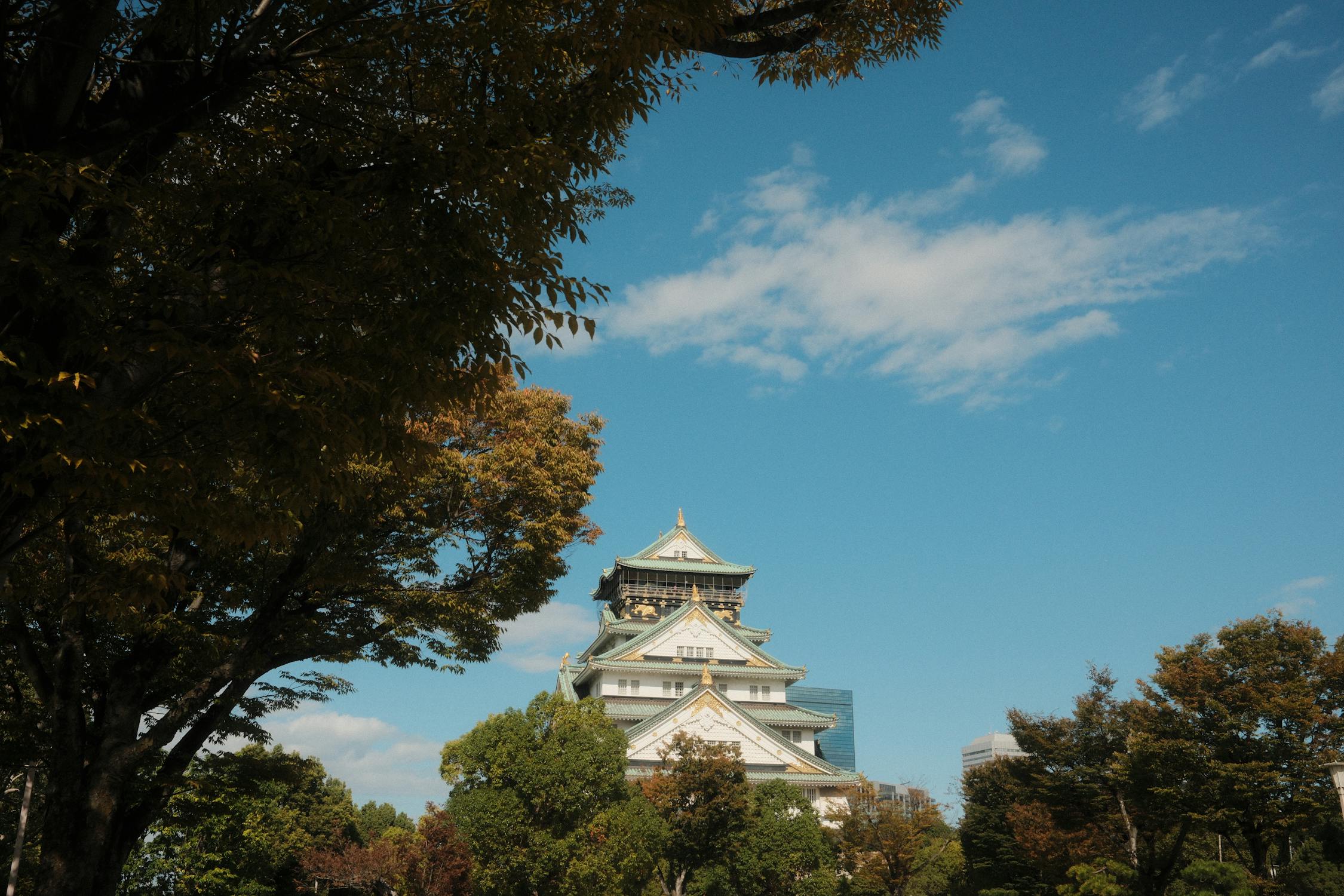
With the paperwork behind you, the city opens up. For the journey from the airport into town, our guide to reaching Osaka covers every route, and our first-time Osaka tips will help you find your feet in those first disorienting hours.
Frequently asked questions
Do US citizens need a visa for Japan?
No. US citizens can enter Japan for tourism without a visa and stay up to 90 days on a valid US passport. On arrival at Kansai International you receive a Temporary Visitor landing stamp for 90 days. To stay longer, you would apply for a visa or an extension at a regional immigration office inside Japan.
How long can I stay in Japan as a tourist?
Most visa-exempt travellers get up to 90 days for tourism. Citizens of the UK, Germany, Ireland, Austria, Switzerland, and Liechtenstein may qualify for up to 6 months. If you need a visa to enter, your permitted stay (usually 15 or 30 days) is fixed during the application and noted on the visa.
Can I extend my tourist stay in Japan?
Sometimes, but it is not guaranteed. If you entered on 90-day visa-free entry, you can apply for a single extension of up to 90 days at a regional immigration bureau within Japan. You will need a valid reason and proof of funds, and you should apply at least 2 weeks before your current stay expires. Extensions are granted at the discretion of immigration officials.
What happens if I overstay my visa in Japan?
Overstaying is treated seriously. Consequences can include detention, deportation at your own expense, a re-entry ban of 5 to 10 years, and a possible criminal record. If something genuinely outside your control, such as illness or a natural disaster, stops you leaving on time, contact the nearest immigration bureau immediately, before your permitted stay runs out.
Do I need travel insurance to enter Japan?
It is not a formal entry requirement, but it is strongly advised. Japan has no public healthcare for tourists, and medical bills for the uninsured can be steep. A policy covering medical costs, trip cancellation, and lost luggage is a sensible investment, and our Osaka trip cost guide factors insurance into a realistic budget.
Can I work in Japan on a tourist visa?
No. Tourist visas and visa-free entry permits prohibit any paid work, and that includes freelance jobs, remote work for a Japanese company, and anything that earns income inside Japan. Breaking this rule risks detention, deportation, and a future entry ban. To work in Japan, you need the appropriate work visa arranged through a Japanese embassy.