This article contains advertising. Our booking links are routed through a partner that adds commission tracking automatically, so if you book through one we earn a commission from the provider, at no extra cost to you. It never affects what we recommend. Affiliate disclosure
Osaka Castle history spans 440 years of dramatic destruction and reconstruction. From Toyotomi Hideyoshi’s 1583 original construction with gold-leaf walls; through the 1614-1615 Sieges of Osaka that destroyed the Toyotomi line; the 1620s Tokugawa rebuild with granite walls still standing today; the 1660 gunpowder warehouse explosion and 1665 lightning strike that destroyed the original keep; 200 years of castle existence without its tenshu; the 1868 Boshin War burning; the 1931 ferroconcrete reconstruction funded by public donation; and the 1995-1997 Heisei restoration with elevator added and gold-leaf shachihoko replated – each chapter reflects a different era of Japanese history. This 2026 guide traces the complete history of the castle, what you can still see from each era, and how to read the historical layers when you visit.
Timeline of Osaka Castle History
- 1496-1580: Site occupied by Ishiyama Honganji Buddhist fortress-temple
- 1580: Hideyoshi destroys Ishiyama Honganji
- 1583: Hideyoshi begins constructing Osaka Castle
- 1597: Original castle completed; 5-story keep with gold-leaf walls
- 1598: Hideyoshi dies; succession crisis begins
- 1614 (November): Winter Siege begins; Sanada Yukimura defends Sanada-maru
- 1614 (December): Negotiated peace; Toyotomi fills in outer moat
- 1615 (May-June): Summer Siege; castle falls June 4
- 1620-1629: Tokugawa Hidetada orders complete rebuild; current stones laid
- 1660: Gunpowder warehouse explosion + fire damages castle
- 1665: Lightning strike destroys the tenshu
- 1665-1868: 200 years of castle existence WITHOUT its keep
- 1868: Boshin War; castle burns again
- 1931: Ferroconcrete reconstruction funded by public donation (mayor Seki Hajime collects JPY 1.5 million)
- 1995-1997: Heisei restoration; gold-leaf shachihoko replated; elevator added
- 2026: Castle continues to operate as museum + iconic landmark
Period 1: Pre-Castle Era (Before 1583)
Ishiyama Honganji Fortress
Before Osaka Castle existed, the site was occupied by Ishiyama Honganji – a Buddhist fortress-temple of the Jodo Shinshu sect, founded in 1496. By the 1570s, Ishiyama Honganji was the most heavily fortified religious site in Japan, with 60,000 monks and lay defenders. The fortress occupied the same hilltop as the future Osaka Castle, taking advantage of the natural defensive position.
Oda Nobunaga – Hideyoshi’s predecessor – laid siege to Ishiyama Honganji from 1570 to 1580 in one of the longest sieges in Japanese history. The fortress was finally destroyed in 1580. Hideyoshi inherited the site upon Nobunaga’s 1582 death.
Period 2: Hideyoshi’s Castle (1583-1597)
Construction
Construction of Osaka Castle began in 1583, just months after Hideyoshi consolidated power. The castle was designed to project absolute political authority – it was the largest castle ever built in Japan, intended to outdo any predecessor.
- Builder: Hideyoshi commissioned the design and construction
- Workers: Tens of thousands of laborers; daimyo across Japan donated stones and labor
- Construction time: 14 years to full completion (1583-1597)
- Cost: Massive; effectively bankrupted certain regional lords
The Original Keep (Tenshu)
- Height: 5 stories; with 3 basement levels
- Decoration: Gold-leaf exterior walls; gold-leaf shachihoko (legendary fish creatures) on the roof corners
- Function: Both fortress and palace; ceremonial space
- Tea Room of Gold: Hideyoshi’s famous mobile tea room with gold-leaf walls and ceiling; carried between residences
Period 3: The Sieges (1614-1615)
The Winter Siege (November-December 1614)
- Attackers: Tokugawa Ieyasu + Shogun Hidetada with 164,000 troops
- Defenders: ~100,000 Toyotomi loyalists (mostly ronin); Sanada Yukimura leading defense
- Sanada-maru barbican: Sanada’s defensive earthworks projecting from the southern wall; defended major assaults
- Outcome: Stalemate; negotiated peace
- Peace terms: Toyotomi fills in outer moat (gives up primary defensive advantage)
The Summer Siege (May-June 1615)
- Tokugawa broken peace: Within months of the peace agreement, Tokugawa marched on Osaka again
- Outer moat gone: Toyotomi defenders forced to fight in open battle
- Battle of Tennoji (May 7, 1615): Sanada Yukimura charged directly at Tokugawa Ieyasu’s command post; killed within 50 meters of killing the shogun’s father
- Castle falls June 4, 1615: Hideyori (22) and Yodogimi commit suicide by fire as castle burns
- Outcome: Toyotomi line extinguished; Tokugawa consolidates absolute power
Period 4: Tokugawa Reconstruction (1620-1629)
The Decision to Rebuild
Tokugawa Hidetada (Ieyasu’s son) ordered the complete rebuilding of Osaka Castle in 1620. The Tokugawa government wanted the castle restored as a symbol of consolidated power – but on Tokugawa terms.
The Rebuild
- Architects: Todo Takatora + Kobori Enshu (legendary garden designer)
- Walls: 1620s granite walls; no mortar; still standing today
- Stones: Quarried from Seto Inland Sea quarries; transported by ship
- Stone donations: Each daimyo family donated stones marked with their kamon (family crest) – still visible today
- Largest stone: Tako-ishi at Sakuramon Gate; ~130 tons; one of Japan’s most impressive single-stone constructions
- New tenshu: Rebuilt; less ornate than Hideyoshi’s original
What You Can See Today
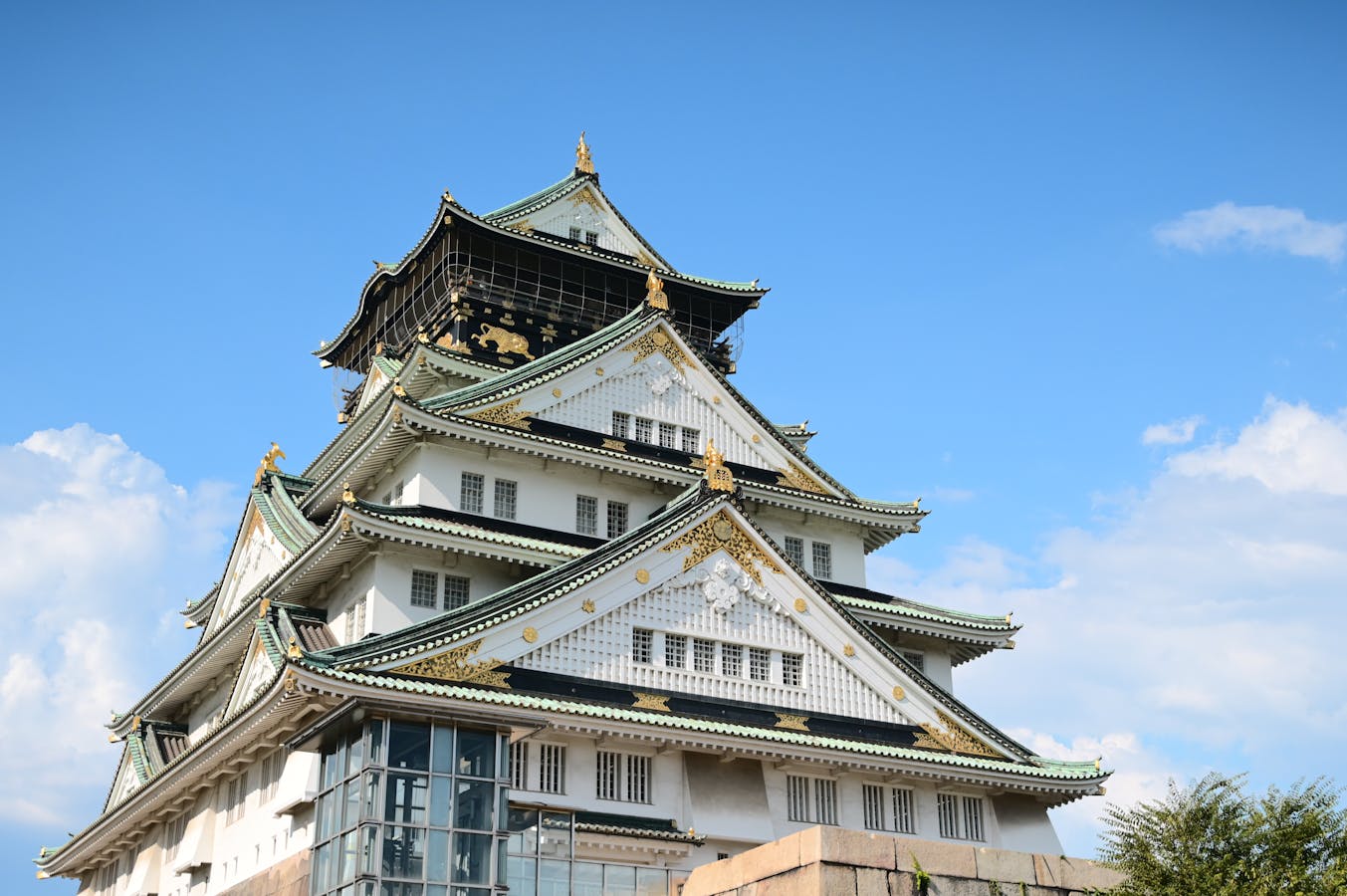
The current 1931 ferroconcrete tenshu is a reproduction, but the walls, gates, moats, and stones you walk past in the castle park are entirely the 1620s Tokugawa rebuild. The 400-year-old stones still bear the kamon marks of the daimyo families who donated them.
Period 5: The Lost Tenshu (1660-1868)
The 1660 Powder Warehouse Explosion
In 1660, a gunpowder warehouse at the castle exploded, causing major fire damage to surrounding structures. The keep survived initially but was structurally weakened.
The 1665 Lightning Strike
In 1665, lightning struck the tenshu directly, destroying it. The Tokugawa government did NOT rebuild the keep. The castle continued to operate for 200+ years without its iconic tower.
1665-1868: Castle Without a Keep
For 200 years after the lightning strike, Osaka Castle existed without its tenshu. The walls, gates, palace buildings, and ceremonial spaces continued to function. This is one of the longest periods in Japanese castle history without a keep.
Period 6: The Boshin War Burning (1868)
The 1868 Boshin War (the conflict that overthrew the Tokugawa Shogunate and restored Emperor Meiji to power) brought new destruction. As Tokugawa forces retreated from Osaka, they set fire to the castle to prevent it from falling into Imperial hands. Most remaining castle structures burned. The walls and stones survived.
Period 7: The 1931 Reconstruction
Mayor Seki Hajime’s Initiative
In 1928, Osaka Mayor Seki Hajime initiated a public donation campaign to rebuild the castle keep. By 1931, JPY 1.5 million had been collected from public donations – a remarkable sum for the era. The reconstruction was designed by architect Furuta Toshiya.
The Ferroconcrete Construction
- Material: Ferroconcrete (reinforced concrete) – not the original wooden materials
- Design: Faithful to historical drawings of the 1665 pre-lightning keep
- Function: Symbolic and museum; not military
- Controversy: Some traditionalists criticized using concrete; preservationists defended it as appropriate for the modern era
- Result: Iconic Osaka Castle silhouette as we know it today
The 1931 Keep Today
The current tenshu has stood since 1931 – nearly 100 years. While it’s not the “original” structure (which Hideyoshi’s tenshu burned in 1615), it accurately reflects the pre-1665 historical appearance. It functions as the Osaka Castle Museum.
Period 8: 1995-1997 Heisei Restoration
- Project: Major restoration of the 1931 reconstruction
- Shachihoko: Replated with gold leaf (the original 1931 plating had weathered)
- Elevator added: 8th floor now accessible by elevator
- Museum interior renovated: Updated exhibits and visitor flow
- Earthquake retrofitting: Structural improvements
- Result: Castle remains structurally sound for the foreseeable future
Visiting the Castle: A Historical Walking Guide
What Each Element Reveals
- Outer walls and moats: 1620s Tokugawa rebuild; original stones still in place
- Sakuramon Gate: Contains the Tako-ishi (octopus stone) – ~130 tons
- Otemon Gate: Main entrance; 1620s construction
- Stones with kamon (family crests): Look for stamped family symbols on individual stones
- Hokoku Shrine: Within castle park; dedicated to Hideyoshi; free entry
- The tenshu (keep): 1931 ferroconcrete reconstruction; museum interior
- Donjon interior: Multi-floor museum covering Hideyoshi-to-modern history
- Nishinomaru Garden: Cherry blossom garden; separate JPY 350 admission in season
Photography Spots for Different Eras
- 1620s stones with kamon: Walk slowly past the inner walls; identify specific donor families
- The Tako-ishi: 130-ton single stone at Sakuramon Gate
- Castle keep (1931 reconstruction): Iconic silhouette from the south side
- Hokoku Shrine: Hideyoshi memorial within the park
- Moats with castle reflection: Most dramatic photography subject
- Cherry blossoms (April): Castle framed by sakura
- Autumn foliage (November): Castle framed by colorful leaves
The Castle Museum Interior
What’s Inside (1931 Reconstruction)
- Floor 1: Lobby; ticket booth
- Floor 2-7: Museum exhibits covering Hideyoshi era through modern
- Floor 8: Observation deck with 360-degree city views
- Elevator: Available since 1997
- Audio guides: Available in English
- Admission: Adult JPY 600; free for under 15 and Osaka residents 65+
- Hours: 09:00-17:00 (last entry 16:30); extended hours during sakura and Golden Week
- Time needed: 60-90 minutes
Key Exhibits
- Hideyoshi-era documents and artifacts
- Sengoku-period samurai armor
- Tokugawa-period maps and military diagrams
- 1931 reconstruction documents
- Boshin War narrative
Hokoku Shrine
- Location: Within Osaka Castle Park
- Dedicated to: Toyotomi Hideyoshi
- Free entry
- Significance: Modern shrine maintaining the memory of Hideyoshi; popular for business prayers
- Goshuin (shrine stamp): Available; JPY 500
- Hideyoshi statue: Bronze; centerpiece of the shrine grounds
Historical Significance Across Eras
1583-1597 (Hideyoshi Era)
The castle represented the unification of Japan under a peasant-born leader. Gold-leaf exterior, Tea Room of Gold, ceremonial scale – all expressions of Hideyoshi’s authority.
1614-1615 (Sieges)
The sieges marked the violent transition from Toyotomi to Tokugawa rule. The Sanada-maru defensive earthworks; the desperate Sanada Yukimura charge at Tokugawa Ieyasu’s command post; the burning castle and the suicide of Hideyori and Yodogimi.
1620-1665 (Tokugawa Rebuild + Loss)
The 1620s rebuild stones still stand today. The 1665 lightning strike began 200+ years of castle existence without its iconic keep.
1868-1931 (Boshin War to Public Reconstruction)
The 1868 burning destroyed remaining structures. Mayor Seki Hajime’s 1928-1931 public donation campaign restored the iconic silhouette in ferroconcrete – one of Japan’s first major modern reconstructions of a historical building.
1931-Present (Modern Castle)
The reconstructed castle has stood for ~95 years – longer than many other “original” castles in Japan. The 1995-1997 Heisei restoration ensured continued structural integrity. The castle functions as the most-visited tourist attraction in Osaka and a symbol of the city.
Architectural Details to Observe
Stone-Cutting Styles (1620s Walls)
- Tako-ishi pattern: A specific cutting style with octopus-like irregular shapes
- Different stone colors: Stones from different quarries had different colors; visible to the trained eye
- Kamon stamps: Small family crests stamped on stones donated by specific daimyo families
- Repair stones: Later patches are visibly different from original stones
Roof Decorations
- Shachihoko (legendary fish): Gold-leaf creatures on corners of tenshu roof
- 1995-1997 replating: Current gold leaf dates from the Heisei restoration
- Hideyoshi’s original: Were larger and more elaborate
Garden Design
- Nishinomaru Garden: Designed by Kobori Enshu (1620s) – same architect as the castle rebuild
- Cherry trees: Roughly 3,000 cherry trees on the grounds; peak early April
- Plum grove: Smaller plum grove blooming February
Visiting Strategy
Half-Day Visit (Standard)
- 09:00: Arrive at Tanimachi-yonchome Station
- 09:15: Enter castle park (free); walk Otemon to outer grounds
- 09:45: Find the Tako-ishi at Sakuramon Gate; note the largest stone
- 10:15: Hokoku Shrine; pay respects to Hideyoshi
- 11:00: Enter the Donjon (paid; JPY 600)
- 11:00-12:30: Tour the castle museum; observation deck
- 12:30: Lunch at park or nearby
- 14:00: Cross to Osaka Museum of History for full historical context
Full Day Historical Immersion
- 09:00-12:30: Osaka Castle complete tour
- 12:30-13:30: Lunch break
- 13:30-15:30: Osaka Museum of History
- 15:30-16:30: Hokoku Shrine + walk Nishinomaru Garden
- 17:00: Coffee + reflection at park cafe
Best Time to Visit
Time of Day
- 09:00 opening: Calmest; coolest in summer
- 15:00-17:00: Golden hour photography
- 17:00: Closing time; castle illuminated at night during special events
Time of Year
- Late March – early April: Cherry blossoms peak; spectacular but crowded
- Late November: Autumn foliage at Nishinomaru Garden
- December (illumination season): Castle illuminated 17:00-22:00 special events
- Mid-January-February: Lowest crowds; cold but dry
- July-August: Hot but festival atmosphere with Tenjin Matsuri July 24-25
- Avoid: Golden Week (April 29 – May 6) – maximum crowds
Books and Further Reading
- “Taiko” by Eiji Yoshikawa: Classic novel about Hideyoshi
- “The Sieges of Osaka” by NHK: Documentary book on the 1614-1615 events
- “Osaka Castle: From Hideyoshi to Today”: Comprehensive guide
- “Sanada Yukimura”: NHK Taiga drama TV series on the legendary samurai
- “Osaka Through Time” (museum books): Available at the Osaka Museum of History bookstore
For Architecture Buffs
- Compare the 1931 ferroconcrete reconstruction to “original” wooden castles (Himeji, Matsumoto)
- Note the 1620s granite walls – the actual original-period stones still in place
- Observe how the modern reconstruction integrates with the historical setting
- Photograph stones with kamon (family crests) for visual evidence of donor families
- Examine the Kobori Enshu garden design at Nishinomaru
For History Enthusiasts
- Walk the Sanada-maru memorial area to understand the Winter Siege defense
- Visit Sanko Shrine (Tennoji) for Sanada Yukimura statue
- Visit Yasui Shrine (Tennoji) – the area where Yukimura was killed
- Read about Toyotomi Hideyori at Hokoku Shrine
- Combine with Osaka Museum of History for full chronological context
Practical Tips
- Wear comfortable shoes: 5-7 km walking common at castle visit
- Bring water: Vendors at park; bring own bottle
- Sun protection: Outer grounds have limited shade
- Camera battery: Bring spare; photography opportunities abundant
- Combined ticket: Some seasons offer combined Castle Park + Donjon + Garden tickets
- Audio guides: Available at Donjon; multiple languages
- Restroom: Available throughout the park; clean and free
- Cherry blossom timing: Peak window is narrow (1 week); book in advance
- Photography during cherry blossoms: Castle Park is photo-saturated; early morning best
Why Osaka Castle’s History Matters
Osaka Castle’s 440-year history compresses many of the great themes of Japanese history into one site: the rise of a peasant-born unifier; the destruction of his line in dramatic sieges; centuries of Tokugawa Shogunate rule; 19th-century revolutionary war; 20th-century modernization through public donation; late-20th-century cultural restoration. Walking the castle grounds with the historical context in mind transforms a tourist visit into one of the most rewarding cultural experiences available in Japan.
Final Word: Osaka Castle History
Osaka Castle history spans Hideyoshi’s 1583 original through Sanada Yukimura’s 1615 last stand to the 1931 public-donation reconstruction to the modern museum. The current building is a 1931 ferroconcrete reconstruction, but the stones, gates, moats, and ground plan are entirely 1620s Tokugawa. Walking the castle park with this multi-layered historical context produces a visit that transcends generic sightseeing – the castle becomes a physical record of 440 years of Japanese history compressed into one location.